
Algeria and Niger have formalized a new phase of technical cooperation, signing binding agreements to transfer expertise and launch joint training in public works and infrastructure. The move signals a deepening of bilateral ties with immediate operational consequences.
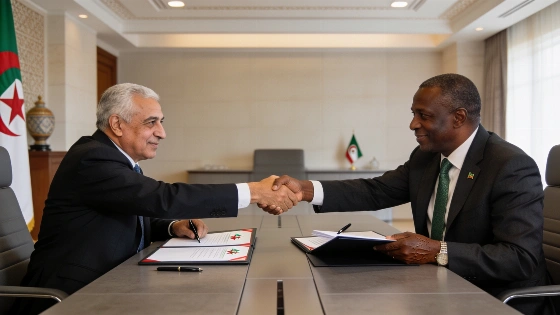
Algeria's public works sector is no longer just talking about regional partnership-it is executing it. This week, Algerian and Nigerien officials signed a suite of technical cooperation agreements, setting in motion immediate joint action on training, expertise transfer, and infrastructure development.
The agreements, finalized in Algiers between the Laboratoire central des travaux publics (LCTP), the Autorité nationale de contrôle technique des travaux publics (CTTP), and their Nigerien counterparts, mark a concrete shift from diplomatic protocol to operational delivery. The ink is barely dry, but implementation is already underway.
From Protocol to Practice: What Changed
Unlike previous rounds of dialogue, this latest engagement produced enforceable commitments. The two sides adopted a final joint action plan, with the first phase launching immediately. The focus: technical training for Nigerien engineers, rehabilitation of key infrastructure labs, and structured knowledge transfer in public works standards and quality control.
These steps are not isolated gestures. They directly follow the March 2026 session of the Algerian-Nigerien joint commission in Niamey, where both governments pledged to move beyond declarations. The current agreements are the operationalization of those promises, reinforced by follow-up visits and technical exchanges.
Strategic Stakes: Why This Matters for Both States
For Niger, the partnership offers access to Algerian technical know-how and institutional support at a time when infrastructure capacity is a national priority. For Algeria, it is a demonstration of regional leadership and a calculated investment in cross-border stability-especially along the Algeria-Niger corridor, a zone of both opportunity and risk.
The agreements cover not only training but also the rehabilitation of Niger's public works laboratories, aligning technical standards and creating a platform for future joint projects. The CTTP and LCTP are now directly linked to their Nigerien peers, with a formal mechanism for monitoring progress and expanding cooperation.
Operational Consequences and Regional Implications
The immediate outcome is the deployment of Algerian expertise to Niger, with technical teams and training modules already scheduled. The broader consequence is the institutionalization of a bilateral infrastructure axis, potentially shaping future trade, logistics, and security cooperation across the Sahel and Maghreb.
While the agreements are technical in nature, their political subtext is clear: Algeria is positioning itself as a regional anchor, using infrastructure diplomacy to reinforce alliances and project influence southward. For Niger, the deal is a pragmatic step to accelerate capacity-building without waiting for slow-moving multilateral aid.
Algeria's move to operationalize these agreements-rather than letting them languish as diplomatic formalities-signals a shift in how the region approaches cross-border cooperation. The real test will be whether this model delivers measurable improvements on the ground. But for now, Algeria has set a new bar for actionable partnership in the Maghreb-Sahel corridor, and others will be watching to see if this is the start of a broader trend or a one-off success.