A failed coup attempt in Niger has highlighted Russia's growing role in supporting military regimes in the Sahel, as Russian paramilitary forces intervened to suppress a rebellion, raising questions about regional security and strategic autonomy.
Niger's ruling military council narrowly avoided its most serious internal threat since the 2023 coup, after a group of soldiers staged a rebellion over the weekend. The confrontation, which lasted around 24 hours, ended only after Russian paramilitary forces intervened to support the regime.
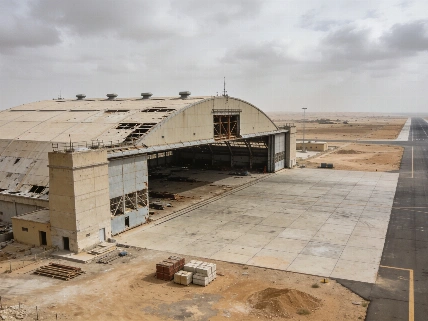
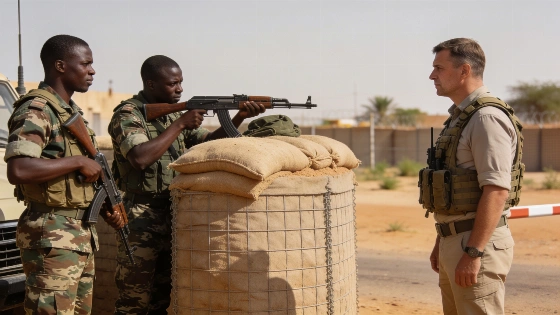
The mutineers, mainly young soldiers, seized hostages at a key military base in Niamey and fired shots near the presidential palace, located about 12 kilometers from the base. According to analysts and diplomats, the rebellion was suppressed by the presidential guard with direct support from the Russian "Africa Corps" paramilitary group.
Russia's ambassador to Niger, Viktor Voropaïev, told Russian media that Niger had requested Russian assistance and that the rebels were "neutralised, notably thanks to the intervention" of Africa Corps. Nigerien authorities have not yet issued an official statement on the events.
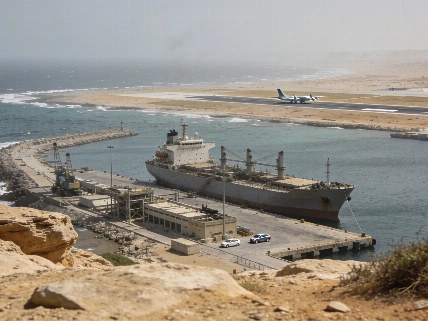
Analysts noted that the outcome at Niamey's base 101, adjacent to the international airport, remained uncertain until Russian forces became involved. This marks the second time this year that Africa Corps has intervened to protect power centers in the Sahel. In May, Russian forces helped repel large-scale attacks by jihadists and rebels in Mali, another country governed by a military council.
Russia's Strategic Priorities in the Sahel
Wassim Nasr, a senior researcher at the Sofan Center, observed that Africa Corps prioritises regime protection over counterterrorism, with the group's main objective being to preserve the military governments in power. This approach has enabled Russia to expand its influence in the Sahel, especially after Niger, Mali, and Burkina Faso severed security ties with Western partners and turned to Moscow.
Initially, these countries relied on the Wagner Group, but following its replacement, Africa Corps now operates under the direct command of Russia's Ministry of Defence. While official numbers are unavailable, estimates suggest 1,700 to 2,000 Russian personnel are present across Niger, Mali, and Burkina Faso, with around 1,000 Wagner operatives in the Central African Republic.
Russia's growing presence has allowed it to compete with the US, Europe, and China for influence in Africa, particularly in security, economic, and political spheres. Beverly O'Chieng, a Sahel security analyst at Control Risks, noted that Russian support for counterinsurgency, military equipment, and economic agreements is closely tied to the interests of the region's military leaders.
Despite limited resources, Russia has managed to balance diplomacy, counterinsurgency, and geopolitics, positioning itself as a reliable partner. Nasr described the transition from Wagner to Africa Corps as a "good deal for Russia at low cost." However, the partnership has not prevented a deterioration in regional security, as armed groups continue to escalate attacks on urban centers and strategic sites.
Security Risks and Regional Implications
Niamey's airport has suffered two jihadist attacks this year. In June, the al-Qaeda-linked group "Nasra al-Islam wa al-Muslimin" killed 11 soldiers and two civilians, while in January, Islamic State Sahel Province targeted the airport, damaging expensive drones.
Analysts warn that internal threats like the recent rebellion may push military councils to focus more on regime protection than on broader security challenges. The Timbuktu Institute for Peace Studies, based in Senegal, argued that Niger's reliance on Russian intervention exposes the fragility of a regime increasingly dependent on external partners, raising questions about the prospects for strategic autonomy.
Russia's success in helping military councils retain power could make Moscow more attractive to other African governments. Nathaniel Powell, a West Africa analyst at Oxford Analytica, suggested that Russian support for regime survival may encourage other states to deepen ties with Moscow.
Russian Foreign Minister Sergei Lavrov recently reiterated Moscow's willingness to support African countries in counterterrorism efforts. However, some analysts caution that Africa Corps' reputation, including allegations of human rights abuses, may make some governments wary of closer cooperation.
Paul, another analyst, noted that the presence of a foreign force tasked with preventing coups could benefit ruling councils, as such forces lack local interests that might compromise their loyalty and may appear militarily superior to national troops, potentially deterring future coup attempts.
The dynamics of external intervention in the Sahel echo broader regional security concerns, as seen in other recent developments such as Algeria's efforts to counter cross-border criminal networks, highlighting the complex interplay between internal stability and external influence across the region.