Algeria and China have recorded $9 billion in trade in just six months of 2024, a 28% jump over last year. The imminent launch of a direct Algiers-Shanghai air route signals intensifying economic and strategic cooperation.
Algeria and China are accelerating their economic partnership, with trade between the two countries hitting $9 billion in the first half of 2024-a 28% increase over the same period last year. The announcement of a direct air route between Algiers and Shanghai marks a new phase in bilateral connectivity, targeting business, education, and research exchanges.
The surge in trade is not just a headline figure. Algerian exports to China soared to $980 million, more than doubling with a 111% increase. This leap is directly tied to Beijing's decision to grant full customs exemptions to 33 African countries, a policy that has opened the Chinese market to a wider range of Algerian products. The Chinese Ambassador to Algeria, His Excellency Mr. Li Jian, made clear that these numbers are the result of deliberate policy shifts, not mere market fluctuations.
Strategic Projects and Infrastructure Drive Growth
Beyond trade, the relationship is being cemented through joint infrastructure and technology projects. The completion of a railway line serving Algeria's western mining project and the operational launch of the Algerian National Center for Digital Services are tangible outcomes of this cooperation. Work continues on the integrated phosphate project, a sector where Chinese expertise and capital are increasingly visible.
Space technology is also on the agenda. The launch of the Algerian satellite "Alcomsat-1" was highlighted by the Ambassador as a milestone, symbolizing the breadth of collaboration. Diplomatic gestures, such as the exchange of congratulatory telegrams between President Abdelmadjid Tebboune and Chinese President Xi Jinping, reinforce the political dimension of these technical achievements.
Mobility and Education Expand Alongside Trade
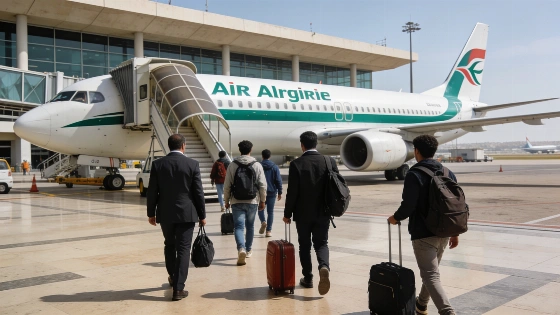
The anticipated Algiers-Shanghai direct flight is more than a logistical upgrade. It is expected to cut travel times for economic operators, students, and researchers, further integrating the two countries' business and academic communities. Air Algérie already connects Algiers to Beijing and Guangzhou; Shanghai will become the third Chinese city on its network.
Mobility is already on the rise. The number of Algerians traveling to China in the past six months has doubled compared to last year, a trend matched by growing enrollment in Chinese language courses at the Confucius Institute in Algiers. These shifts point to a deepening people-to-people dimension that complements the hard numbers of trade and investment.
Political Alignment and Regional Stakes
China's Ambassador did not miss the opportunity to recall Algeria's historic support for UN General Assembly Resolution 2758, which restored the People's Republic of China's seat at the United Nations in 1971. This diplomatic memory is leveraged to frame the current partnership as a continuation of shared interests in justice and equity within the international system.
On regional security, Beijing's position on the Middle East was reiterated: a call for ceasefire, prevention of new conflicts, and support for a political solution to the Palestinian issue. These statements, while familiar, are part of the broader narrative China is building as it deepens its footprint in North Africa.
Algeria's economic and political bet on China is now unmistakable. The numbers are real, the projects are visible, and the direct air link will soon be operational. While some may see this as a pragmatic response to shifting global alliances, the scale and speed of engagement suggest a deliberate strategy to anchor Algeria's future growth to Chinese capital, technology, and markets. For regional observers, the message is clear: Algeria is not waiting for Europe to recalibrate its approach-it is moving decisively eastward, and the consequences for North African trade, infrastructure, and diplomacy will be felt well beyond 2024.