The IMF projects Algeria's 2026 GDP at $331.89 billion, against Morocco's $195.63 billion. Hydrocarbons underpin Algeria's lead as Morocco expands export manufacturing.
The International Monetary Fund's October 2026 World Economic Outlook, published on October 12 and updated on October 15, puts Algeria's 2026 GDP at $331.89 billion and Morocco's at $195.63 billion, a gap of $136.26 billion. Meanwhile, Stellantis plans to spend €1.2 billion expanding its Kenitra factory, lifting annual capacity to 535,000 units. The project targets 400,000 vehicles a year, up from the plant's existing capacity of 200,000, alongside 135,000 micromobility products. International investment is flowing into Morocco's manufacturing sector, although its projected economic output remains well below Algeria's.
The IMF's October 2026 WEO dataset also projects Algerian real economic growth of 3.8% in 2026.
Algeria's hydrocarbon base supports its lead
Algeria ranks fourth among African economies. South Africa leads at $489.08 billion, with Egypt's $442.89 billion economy ahead of Nigeria's $386.67 billion.
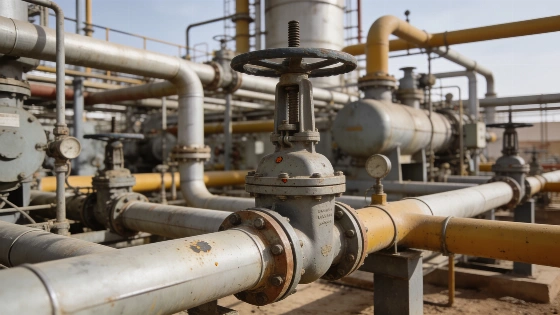
Oil and natural gas exports generate a large share of Algerian government revenue and foreign exchange. Algeria also supplies natural gas to European markets. That reliance leaves public finances exposed when global energy prices shift.
The IMF projected Algerian growth of 3.8% for 2026, citing higher hydrocarbon revenue and public investment. Its outlook also flags persistent fiscal deficits and rising debt as medium-term risks. The fund calls for stronger non-hydrocarbon revenue collection and more efficient public spending. Algeria's search for new investment is also reflected in an earlier licensing report on seven onshore blocks offered to investors.
Morocco expands export manufacturing
Morocco's automotive exports reached 157 billion dirhams ($17 billion) in 2024. The country overtook South Africa in passenger car production, while South Africa retained the lead in total vehicle output. Renault Morocco produced about 394,000 vehicles in 2025.
Stellantis began making vehicles on its Smart Car platform at Kenitra in July 2026, starting with the Fiat Fastback and Fiat Grizzly. Deliveries to dealerships were expected from the fourth quarter. The expanded site handles vehicle assembly and engine production, alongside micromobility products and charging equipment. Stellantis has set a target of more than €6 billion in annual purchases from Moroccan suppliers, with 75% local integration by 2030.
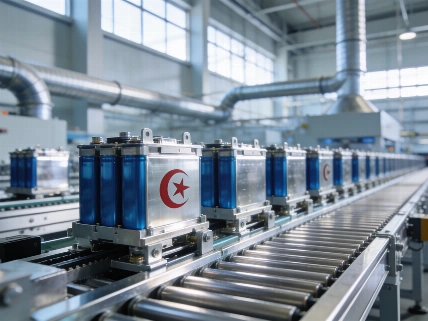
Investment is reaching beyond carmaking. China's Gotion High-Tech is developing a $1.3 billion battery factory in Morocco, planned to serve African and European markets. Its launch is scheduled for October 2026. France's Safran announced a €280 million aircraft landing gear facility expected to create nearly 500 jobs. Morocco has also attracted investment in aerospace and renewable energy.
Morocco is expected to post faster economic growth, supported by industrial production and tourism, with infrastructure development also contributing. Unemployment and water scarcity remain challenges, while reliance on European markets exposes parts of the economy to shifts in external demand.
Algeria's larger output rests heavily on energy exports and public investment. Morocco is building its manufacturing and export base through industrial expansion. The IMF's projected GDP for Morocco remains substantially below Algeria's.