Algeria's government has launched three new digital services for water connections, sanitation, and professional certificates, aiming to streamline public access and accelerate the country's digital transformation through its national e-government portal.
Algeria's digital overhaul of public services has entered a new phase: as of this week, citizens and companies can now request water connections, sanitation hookups, and professional certificates entirely online. The move, announced by the Haut-Commissariat à la numérisation, signals a concrete shift in how Algerians interact with the state-and how quickly they can expect results.
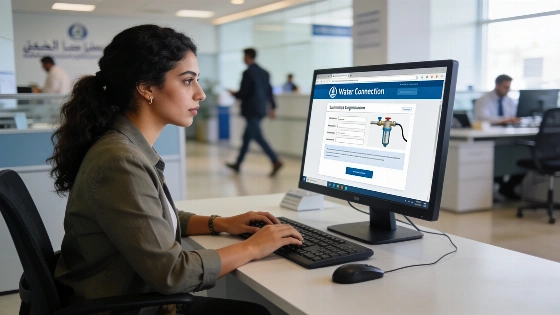
For households, the days of queuing at municipal offices to request potable water or sanitation services are over. The new system allows users to submit applications and track their progress remotely, cutting out paperwork and in-person visits. For businesses in the water sector, the process of obtaining qualification and classification certificates has also been digitized, promising faster turnaround and less bureaucratic friction.
Three Services, One Portal: What Changed
The national e-government platform now hosts three additional services: online applications for potable water connections, public sanitation network hookups, and professional qualification certificates for water-sector companies. Each service is designed for end-to-end digital processing, from initial submission to final approval, with real-time status updates available to applicants.
This expansion is not a one-off. The Haut-Commissariat has made clear that these additions are part of a broader strategy to continuously grow the portal's offerings. The goal: to centralize and simplify access to government services, making them faster and more transparent for both citizens and businesses.
Ambitious Targets and Institutional Backing
The digital portal, launched under the supervision of the President on 5 July, began with 21 services and is set to reach 62 by the end of 2027. The ultimate target is 350 digital services by 2028, according to Meriem Benmoulould, the Haute-Commissaire à la numérisation. This timeline underscores the government's intent to accelerate digital transformation across all sectors, not just water resources.
By integrating these new services, Algeria is betting on digital infrastructure to boost state capacity and reduce administrative delays. The move also signals a recognition that public trust in government often hinges on the efficiency and accessibility of basic services.
Winners, Losers, and the Real Stakes
Citizens stand to gain most immediately, with less time lost to bureaucracy and more predictable service delivery. Companies in the water sector, often hampered by slow certification processes, now have a clearer, faster path to compliance. The state, meanwhile, gains a tool for monitoring and managing service requests at scale, potentially reducing opportunities for corruption and error.
But the real test will be in execution. Algeria's digital ambitions are bold, but the gap between announcement and on-the-ground impact remains wide in many sectors. If the government can deliver on its promises-expanding the portal, maintaining reliability, and ensuring equitable access-it will mark a genuine leap in public administration. If not, the risk is another layer of digital bureaucracy that frustrates rather than empowers. For now, the shift to online water services is a tangible step forward, but the credibility of Algeria's digital transformation will be measured by how these systems perform under real-world pressure.