
A surge in sophisticated online scams targeting Edahabia cards and BaridiMob app users has forced Algérie Poste to launch a nationwide emergency protocol, demanding immediate action from customers to protect their funds and report cyberattacks.
When an Algerian BaridiMob account is compromised, the clock starts ticking. Algérie Poste now demands that victims act within minutes, not hours, to prevent cybercriminals from draining their funds. The escalation comes as digital fraudsters deploy increasingly advanced tactics, from social engineering calls to automated fund theft, targeting the Edahabia card and BaridiMob app ecosystem.
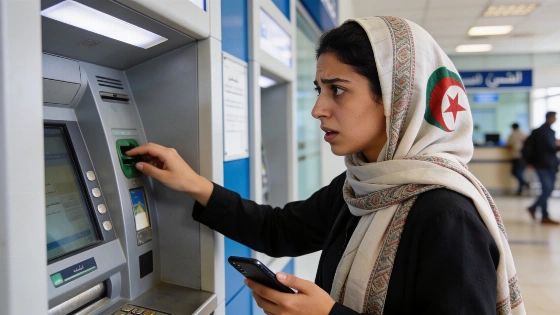
Algérie Poste's central director, Kenza Noureddine, has made the institution's position unambiguous: users must immediately visit the nearest Algérie Poste ATM to change the phone number linked to their account and, if necessary, disable the BaridiMob app. This is not a suggestion-it is the first line of defense against ongoing attacks that have already cost users dearly.
Mandatory Reporting and Account Lockdown
Victims are instructed to file a formal complaint with the police or gendarmerie, regardless of whether money has been lost or the fraud attempt was thwarted. Every report, every preserved trace of evidence, feeds into ongoing investigations to identify and prosecute the perpetrators. Simultaneously, users must call the Algérie Poste customer service line at 1530 to request an immediate account freeze and trigger technical countermeasures.
This multi-pronged protocol is designed to close the window of vulnerability that scammers exploit. The urgency is not theoretical-recent cases have shown that delays of even a few hours can mean the difference between a blocked attempt and a wiped-out balance. As reported earlier, the institution has already faced waves of fraud attempts exploiting new digital services and social media misinformation.
Security Habits and the Limits of Technology
Algérie Poste's campaign is not limited to emergency response. The institution reiterates a non-negotiable rule: Edahabia card credentials, PINs, and one-time passwords must never be shared, regardless of who asks or what justification is given. No technical fix can compensate for a lapse in user vigilance. The evolving sophistication of online scams means that even the most robust digital infrastructure is only as secure as its weakest human link.
For Algeria's digital payments sector, the stakes are rising. The credibility of state-backed platforms like BaridiMob depends on public trust in their security. If users lose confidence, adoption will stall and the broader digital transformation agenda will falter. Algérie Poste's aggressive stance is a tacit admission that the threat is not just technical but existential. Until users internalize the urgency of these protocols, cybercriminals will continue to find soft targets. The institution's message is clear: in the new era of digital finance, security is a shared responsibility, and hesitation is a luxury no one can afford.