Algeria's cement and steel producers are looking overseas for buyers for a structural surplus, but port capacity and the EU's carbon border rules will shape profitable shipments. The country expects non-hydrocarbon exports to reach about US$5 billion in 2026.
Algeria has an estimated cement surplus of close to 20 million tonnes a year, yet annual cement and clinker shipments stand at about 10 million tonnes. That gap sets a practical limit on the export drive: installed capacity alone does not ensure producers can move goods to foreign buyers.
Capacity rose from 41 million tonnes in 2024 to about 42 million by 2026. Domestic demand estimates vary, ranging from around 20 million to 30 million tonnes in 2026. The 2024 figures show a capacity-demand gap of about 18 million tonnes.
Port access shapes export volumes
The government has put port access and financing on its agenda. A September 2025 inter-ministerial meeting brought together ministers responsible for finance, foreign trade, public works and transport, along with the Bank of Algeria governor and exporters. Officials pledged to improve existing infrastructure, expand storage and cut logistics costs.
President Abdelmadjid Tebboune ordered a port adapted for large vessels and dedicated to cement exports. Floating silos were raised as one option, while 20 hectares at Djendjen were earmarked for private operators to build export-only silos. Four new quays were commissioned at the port in May 2026.
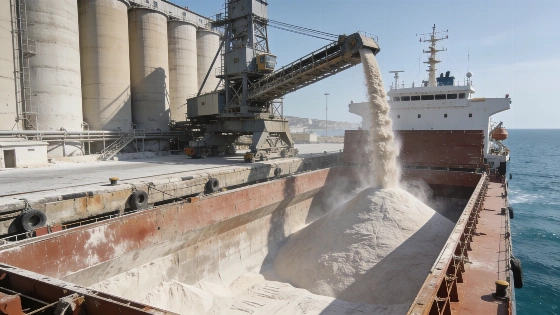
Shipments have already moved through existing facilities. Annaba loaded more than 38,000 tonnes of white cement bound for the United States and Spain on 27 June 2026. Skikda sent more than 13,000 tonnes of cement and clinker to Libya days earlier, then dispatched another 19,000 tonnes to Italy and Libya in September.
Export growth has slowed after a sharp rise
Domestic investment followed a 2020 presidential decision barring imports of materials produced locally. Cement and clinker exports climbed from less than US$60 million in 2019 to US$747 million in 2023. Clinker accounted for about US$438 million of that total, putting Algeria second globally behind Vietnam.
Construction materials exports reached US$1.2 billion in 2023 and topped US$1 billion again in 2024. The sector's exports have generally ranged from US$1 billion to US$1.3 billion a year since 2022. Construction materials and ceramics generated US$560 million in the first seven months of 2025, up 11%.
Groupe Industriel des Ciments d'Algérie shipped about 6 million tonnes of cement and clinker in 2023. Its Chlef plant later exported around 1.9 million tonnes of clinker and 60,000 tonnes of grey cement to European markets in 2025. Holcim El-Djazaïr exported approximately 3.1 million tonnes in 2024, earning more than US$140 million; cement made up about 40% of its volume.
Private producer Biskria Ciment has capacity of about 5 million tonnes and a niche in white cement. A shipment of 30,500 tonnes for American ports was loaded at Annaba in June 2026. Eligible collective participation in official-programme trade fairs can receive 80% support, while transport assistance varies by product and destination.
Steel and regional markets add to the push
Tosyali Algérie reported US$1.2 billion in export income for 2025 and set a 2026 target of US$2 billion to US$2.5 billion. On 10 September 2026, it announced its first export from a new cold-rolling mill, taking its output beyond the reinforcing bar and wire rod that had dominated its exports.
Algeria's wider effort to deepen commercial ties with Qatar is covered in a separate report. For building materials, African buyers remain a key prospect, although exports to Africa were nearly flat in the first seven months of 2025 despite contracts worth more than US$300 million at the Intra-African Trade Fair in Algiers that September. The industry ministry has explored clinker-grinding units in African countries because buyers there prefer finished cement.
EU carbon rules raise the bar
The European Union's Carbon Border Adjustment Mechanism entered its definitive phase on 1 January 2026. Cement is among the covered sectors, alongside iron and steel, aluminium, fertilisers, hydrogen and electricity. The mechanism requires importers to declare embedded emissions; certificates for emissions in goods imported during 2026 are to be surrendered from 2027. The EU framework aims to address carbon leakage by placing a carbon-related cost on covered imports, as outlined in SGS's CBAM overview.
Algeria already has a substantial foothold in this regulated market. Cement Europe trade figures based on Eurostat data put EU27 cement and clinker imports at almost 5 million tonnes in the first half of 2026. Turkey supplied 48.2%, Algeria 14.8%, Ukraine 9.9%, Tunisia 7.9% and Egypt 6%; the three North African suppliers together accounted for 28.7%. Algeria's share works out to roughly 740,000 tonnes when applied to the reported total, though the trade figures give market share rather than an exact Algerian tonnage.
Under EU default values, Algerian grey Portland cement starts at 1.30 tonnes of carbon dioxide per tonne, rising gradually to 1.69. Verified plant-level emissions data can be used in CBAM declarations and may affect the resulting certificate requirement. Exporters need production data and calculation procedures that EU rules allow authorities to verify, while EU importers remain responsible for the required declarations and certificates. Holcim El-Djazaïr markets a lower-carbon cement range and has opened carbon-capture discussions with Sonatrach's laboratory division.
Non-hydrocarbon exports approached US$4 billion in the first eight months of 2026, up about 10% year on year. The Ministry of Foreign Trade and Export Promotion expects the full-year total to reach around US$5 billion.