The IDF's 2025 atlas puts adult diabetes prevalence at 17.5% in Algeria, or about 4.8 million people. Across the Maghreb roughly one-third of people with diabetes do not know they have it.
About 84.7 million adults in the Middle East and North Africa were living with diabetes in 2024, according to the International Diabetes Federation's Diabetes Atlas 2025. That is roughly one in six adults, giving the region the world's highest prevalence.
In Algeria, the atlas estimates that 17.5% of adults aged 20 to 79 have diabetes, or approximately 4.76 to 4.8 million people. About 1.5 million adults in Algeria are estimated to be undiagnosed. Egypt has the largest reported number among the countries cited, at about 13.2 million adults.
Many cases remain undiagnosed
Across the Maghreb, roughly one-third of people living with diabetes are unaware of their condition. The disease can develop for years without noticeable symptoms, and some people are diagnosed only after complications arise. Algeria's estimated undiagnosed population underscores the scale of the detection challenge.
Algeria's adult prevalence is below Egypt's 22.4%, the highest among the North African countries listed. Tunisia stands at 16%, Libya at 15.8% and Morocco at 11.9%. These estimates cover adults aged 20 to 79; IDF country estimates may be revised between Atlas editions as survey inputs and methods change.
Prevention and health system pressure
The atlas projects that the number of people with diabetes across the Middle East and North Africa could rise by about 92% by 2050. The projection is regional, while the reported country estimates provide a current measure of the scale of diabetes in Algeria.
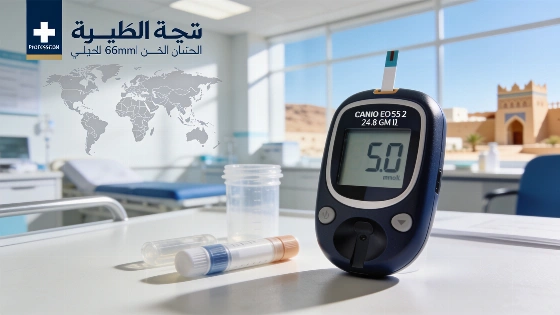
Algeria's Ministry of Health has set out a screening programme focused on people over 35 and those with overweight or obesity, hypertension, a family history of diabetes or a previous history of gestational diabetes. Instruction No. 27, dated 4 November 2026, calls for screening days at health centres and mobile units in isolated areas. It also directs screening activities to universities and vocational-training centres, as well as public administrations and businesses. Preliminary positive tests are to be followed by laboratory confirmation and appropriate care. The instruction also calls for facilities to have glucose meters and test strips, with lancets and laboratory screening resources also required, as the directive sets out.
In November 2026, the Ministry of Health also launched a national guide covering diabetes prevention and screening, followed by diagnosis and assessment. It sets out regular follow-up and addresses complication prevention and treatment, while also covering therapeutic education. The guide includes advice for children and pregnant women, as well as older people. Separate guidance covers hospitalised patients and people fasting during Ramadan. The Ministry said the guide is intended to improve care and standardise practices across health institutions. Mobile-clinic screening for diabetes, hypertension and obesity was scheduled in Naâma for 20-22 November and in El Bayadh for 24-26 November, alongside the national care guide.
The Ministry's prevention priorities include reducing excess weight and physical inactivity. It also targets unhealthy dietary habits, while screening takes account of hypertension and family history. Its planned mobile units are intended to extend testing to remote areas, while the national guide establishes a framework for continuing care after diagnosis.
These figures describe a public health challenge alongside other questions of state capacity; an earlier Algeria analysis examined the country's reliance on hydrocarbons.