
Algeria's government has approved a targeted death penalty for arsonists and child abductors, fast-tracked wildfire compensation, and set new priorities for rail and education. The moves signal a hardening stance on crime and a push to restore state capacity after recent crises.
Algeria's leadership has drawn a sharp line: those found guilty of orchestrating deadly wildfires or abducting and abusing minors will now face the death penalty under a new legal overhaul. This is not a blanket return to capital punishment, but a pointed response to the devastation and outrage triggered by recent arson attacks and child abductions.
The government's decision, announced after a high-stakes Council of Ministers session chaired by Abdelmadjid Tebboune, marks a calculated escalation. The move comes as the state seeks to reassert control and demonstrate resolve following a summer of catastrophic fires that exposed both criminal intent and bureaucratic inertia.
Compensation and State Response after Wildfires
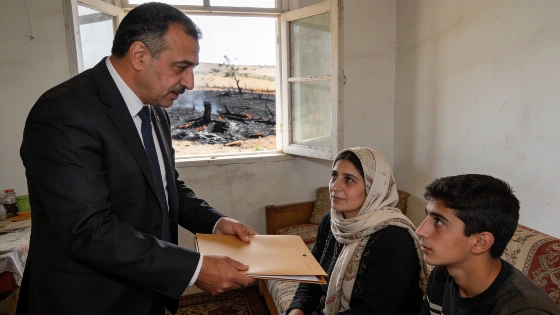
Immediate action is now the order of the day for families and livestock owners who lost everything in the blazes. Tebboune has ordered that compensation payments begin this week, with the Minister of Agriculture personally overseeing the process to prevent administrative delays. The president's message was blunt: no bureaucratic obstacle will be tolerated. The rapid restoration of electricity, water, and internet in affected areas was held up as a rare success, with agencies like Sonelgaz and Mobilis singled out for praise.
Public solidarity has been a rare unifying force, with Algerians at home and abroad mobilising to support victims. The government's urgency is a direct response to the scale of destruction and the expectation of swift, tangible relief. As reported earlier, authorities have already pledged full compensation for wildfire victims, but the new directive aims to cut through the red tape that has historically slowed disaster response.
Production and Infrastructure: Doubling Down on Self-Reliance
Beyond crisis management, the Council of Ministers has doubled down on economic self-sufficiency. State-owned enterprises are under orders to ramp up domestic production, with the explicit goal of doubling output to supply Algeria's major infrastructure projects. This is not a new ambition-previous sessions have hammered the need to reduce dependence on imported raw materials, especially in the petrochemical sector. The message is clear: improvisation and last-minute foreign purchases are out, local manufacturing is in.
Rail infrastructure is now a national priority. The mining rail line connecting Bled El Hadba to Oued El Kebrit and the Port of Annaba is on track for a March 2027 launch, feeding into the country's phosphate and fertiliser megaprojects. Meanwhile, the north-south rail corridor to Tamanrasset has been elevated to "absolute priority" status, with all available resources directed toward a 2028 completion. The government frames these projects as historic milestones, not just for logistics but for national integration and economic sovereignty.
Education and Heritage: Tightening Control and Raising Standards
Education reform is also on the agenda, but with a warning: schools must remain insulated from ideological battles and partisan interference. The Minister of Education has been tasked with ensuring a smooth 2026-2027 school year, building on recent improvements and leveraging the sector's accumulated expertise since 1962. Any proposed reforms will now be vetted exclusively within the Council of Ministers, shutting down the practice of floating trial balloons in the press.
In a move to reclaim Algeria's archaeological legacy, a new National Agency for Archaeological Heritage will be established under the direct authority of the Presidency. The agency will enjoy financial and administrative autonomy, with a mandate to drive scientific advances in excavating and showcasing three millennia of history, from the Numidian kingdom to the present.
Algeria's latest policy package is a study in contrasts: harsh penalties for the most egregious crimes, but also a push for efficiency, national pride, and institutional discipline. The government is betting that visible action-whether in the form of compensation payments, infrastructure progress, or legal crackdowns-will restore public confidence battered by disaster and dysfunction. Yet the selective application of the death penalty, while politically expedient, risks entrenching a culture of exceptionalism rather than systemic reform. For now, Tebboune's administration is signalling that Algeria's future will be built on both hard edges and rapid delivery, with little patience for delay or dissent.