
An Algerian man who impersonated the Prime Minister's son to orchestrate a high-value fraud has been sentenced to six years in prison, exposing persistent vulnerabilities in public trust and the enduring lure of privileged access in Algeria's economy.
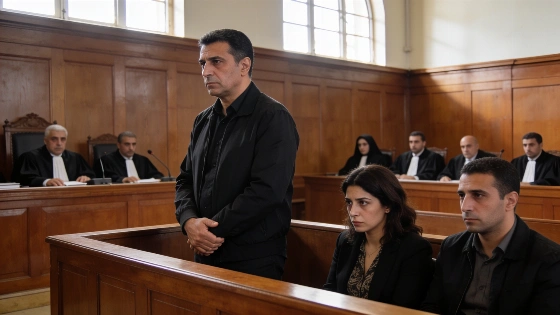
Six years behind bars and a 300,000 dinar fine now await S. N., the man who convinced victims he was the son of Algeria's Prime Minister, promising privileged access to auctioned vehicles and exploiting the country's appetite for shortcuts in a tightly regulated market. The Chéraga court's verdict, delivered Sunday, also imposed two-year sentences and 200,000 dinar fines on his wife and an associate, while a fourth defendant walked free.
The scheme's core was audaciously simple: S. N. leveraged a shared surname and a forged anti-corruption agency card to present himself as a political insider. He dangled the prospect of exclusive deals on cars seized and sold at public auctions, extracting sums ranging from 6.5 million to 55 million dinars from at least three victims. One woman handed over 6.5 million dinars for a car that never materialized; a Birkhadem merchant lost 46 million dinars after being promised two vehicles, on top of a 9 million dinar unpaid produce bill racked up by the accused.
Forged Credentials and the Mechanics of Deception
To cement his credibility, S. N. flashed a counterfeit card from the Organe national de lutte contre la corruption, a move calculated to silence doubts and reinforce his supposed connections. In court, he insisted the card was genuine, even as evidence mounted that it was a fabrication. The use of falsified official documents is a recurring tactic in Algerian fraud cases, as seen in other high-profile scams involving fake public contracts and bogus military credentials.
His wife and friend, both convicted as accomplices, denied any knowledge of the fraud, claiming their involvement was limited to routine business dealings. The main defendant, for his part, portrayed himself as a legitimate car parts dealer, not a con artist. Yet the court found the pattern of deception clear: usurpation of identity, forgery, fraud, and forming a criminal association to commit these acts.
Victims and the Allure of Privileged Access
The promise of a shortcut-access to vehicles through connections-remains a potent lure in Algeria, where bureaucracy and scarcity often drive citizens to seek favors from those claiming influence. The Chéraga court has seen similar cases before, including a recent prosecution of a man accused of using a moudjahid license to scam would-be car buyers. The persistence of such schemes underscores the vulnerability of citizens to manipulation by those who claim ties to power.
One victim, a woman who paid 6.5 million dinars, testified that she never received the promised car. The accused countered that he had returned her money before any complaint was filed. In the case of the Birkhadem merchant, the relationship soured only after the accused demanded a further 46 million dinars for two vehicles that never arrived, compounding the merchant's losses from unpaid produce sales.
Legal Arguments and the Limits of Denial
During the trial, defense lawyers challenged the charge of forming a criminal association, arguing that mere business relationships do not constitute conspiracy. They also dismissed social media evidence-photos of luxury cars, cash, and upscale restaurants-as insufficient to prove intent to defraud. The prosecution, however, pointed to written exchanges and financial records as proof of the illicit scheme. The court ultimately sided with the prosecution, ordering the convicted trio to pay 5 million dinars in damages to the civil parties.
Fraud exploiting Algeria's appetite for privileged access is not new. As reported earlier, authorities have repeatedly warned of scams targeting citizens' trust in officialdom, especially as new financial and administrative services come online.
The Chéraga verdict sends a clear message: the courts are prepared to impose real penalties for impersonation and fraud, even when the accused claim only business motives. Yet the persistence of such cases reveals a deeper problem-an environment where the promise of insider access remains a powerful tool for deception. Until Algeria addresses the systemic drivers of this demand, opportunists will continue to find willing marks, and the courts will remain busy untangling the fallout.