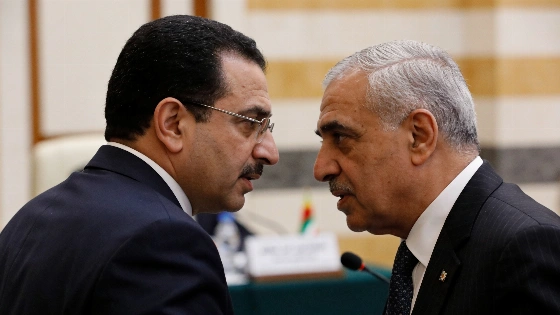
At an OIC meeting in Baghdad, Iran's foreign minister urged the bloc to act over Gaza. He also told Libya's acting foreign minister that stability in Libya is impressive to peace across North Africa.
Iran's Foreign Minister Abbas Araqchi met Libya's acting foreign minister, Taher al-Baour, in Baghdad on Saturday, October 17. They met on the sidelines of the 52nd session of the Organization of Islamic Cooperation (OIC) Council of Foreign Ministers, which ran from October 17 to 18. A meeting report said they discussed bilateral relations, regional developments and international affairs.
The Baghdad meeting was held under the theme "Dialogue and Solidarity: Two Impressive Pillars for Promoting Peace and Sustainable Development." Foreign ministers from the OIC's 57 member states attended. Iraq took over the council's chairmanship from Turkey. It was the first OIC foreign ministers' meeting in Baghdad in about 45 years. The agenda covered Palestine and Gaza, regional crises and security, alongside economic and infrastructure cooperation. The National reported that Palestine and regional conflicts topped the agenda.
Araqchi calls for OIC action over Gaza
Araqchi called Palestine the highest priority for the Muslim world and the international community. He cited the continued occupation and what he called genocide by the Zionist regime. He urged the OIC to act urgently to end the violence in Gaza and what he described as Israeli impunity. Palestine and developments in Gaza were central issues at the session.
Libya and regional stability
The ministers reviewed relations between Tehran and Tripoli, and stressed the value of stronger consultations to develop those ties. Araqchi also reiterated Iran's support for Yemen's national sovereignty and territorial integrity, and called for an end to foreign interference in the country's internal affairs.
Araqchi said security and stability in Libya are prerequisites for peace and stability across North Africa. On October 14, the UN special envoy for Libya told the Security Council that institutional divisions continued to threaten the country's stability. The envoy also cited economic deterioration and fragile security, and urged Libyan leaders to overcome their differences and create conditions for nationwide elections. The UN briefing on Libya provided that assessment. Separately, an earlier report covered Libya's work with the EU and Expertise France on energy efficiency and green industry. The two sides also exchanged views on regional developments and issues facing the Muslim world.