Libya's Ministry of Industry and Minerals has started a new phase of work with the EU and Expertise France. The goal: overhaul energy efficiency and speed up the country's move to green industry through new rules, training, and pilot projects.
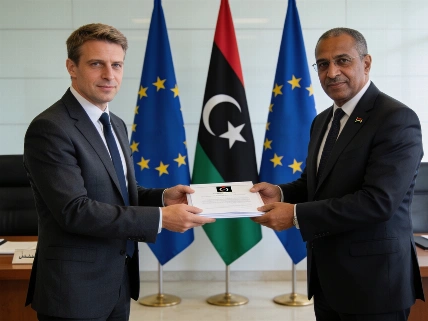
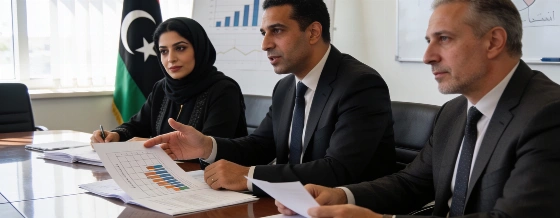
Libya's drive for a more sustainable industrial sector moved ahead as the Ministry of Industry and Minerals held its first coordination meeting with the EU Delegation to Libya and Expertise France. This meeting, confirmed by the Libyan News Agency (LANA), brought Minister Mohamed Abdelkader together with French experts to push Libya's shift to green industry. The talks marked a move from early discussions to hands-on planning with outside partners. Libya is now following a wider Maghreb trend of modernizing industry.
Minister Abdelkader led the meeting at the Ministry's headquarters. This was not just a diplomatic event. It kicked off the EU-Libya Initiative for Cleaner Energy and Industry. The platform aims to move Libya's industry away from old habits and toward a more efficient, environmentally responsible model. Libya's oil sector still dominates the economy, with output steady at about 1.4 million barrels per day. This is despite recent disruptions and protests at key oil fields, as reported by Reuters. The country's heavy reliance on hydrocarbons shows why it needs to diversify and use energy more efficiently.
Three-pronged strategy for transformation
The talks focused on three main areas: fixing the regulatory framework and improving coordination, building local skills with international help, and starting pilot projects to test new ideas. The Head of Energy Cooperation at the EU Delegation and senior staff from Expertise France joined the meeting. Their presence showed that European partners are not just giving advice-they are taking part in Libya's industrial transition. This approach is similar to what has happened in Tunisia, where the Tunis Afrique Presse (TAP) agency has reported on EU-backed technical help for industrial reforms.
Libyan officials, including the Director General of the Green Industry Transition Centre and the Director of the International Cooperation Office, took part in the talks. This made clear that the government wants to keep these reforms under its own control, not hand them over to outsiders. The Ministry's plan is shaped by Libya's ongoing energy crisis. Power cuts and fuel shortages put extra strain on industry, as documented by Reuters. The recent rollout of mobile fuel stations with strict rationing shows how urgent energy reform and modernization have become.
Institutional cooperation and regional context
Both sides ended the meeting by stressing the need for closer cooperation to support sustainable industry and help Libya move toward a more efficient economy. This approach matches recent steps by other Libyan authorities to modernize key sectors, as reported earlier in the context of border inspection and customs upgrades. The Ministry's work also fits with Libya's recent move to open its energy sector to foreign investment. In February 2026, the country awarded five oil and gas blocks to major global firms like Chevron, Eni, and QatarEnergy, according to the Ecofin Agency. This points to a wider policy shift toward international cooperation and reform, a trend also seen in Algeria's energy diversification, as noted by the Algerian Press Service (APS).
The initiative is still new, but the mix of regulatory reform, training, and pilot projects is a rare example of Libyan institutions and European partners working together in a coordinated way. The real challenge will be turning these plans into real progress, given Libya's complex institutions and history of divided governance. Libya's Ministry of Oil and Gas has set a target to raise natural gas output to at least 4 billion cubic feet per day within 3 to 5 years. This goal is tied to the country's broader push for industrial modernization and has been recognized by the UN Economic Commission for Africa (UNECA) as a key step for regional energy security.
Libya's move to work with European experts and try new models shows a practical shift in industrial policy. If the Ministry can keep up the pace and lock in these reforms, Libya could start to catch up with its neighbors on energy efficiency and green industry. That would bring real benefits for the economy and boost Libya's standing abroad. For more updates on official government actions, readers can check the Libyan News Agency.