A Libyan appeals court has stopped the Presidential Council from replacing the head of the General Intelligence Service. The decision throws the country's security leadership into deeper crisis and highlights the sharp divides inside Libya's political system.
Libya's power struggle has hit another flashpoint. The Zawia Court of Appeal stepped in and froze the Presidential Council's push to change the country's intelligence leadership. The court's urgent order, tied to Administrative Appeal No. 173/2026, blocks Presidential Council Decisions Nos. 8, 9, and 10 of 2026. These decisions aimed to remove Lieutenant General Hussein Mohamed Al-Ayeb as head of the Libyan General Intelligence Service and put Abdulmajid Mliqta in charge, along with a new deputy. The court's move lands at a time when North Africa's institutions are shaky and courts have become key players in checking executive power. Recent statements from the African Union Peace and Security Council and the UN Economic Commission for Africa (UNECA) have pointed to this trend.
This is not the first time Libya's courts have stepped in. Judges across the country have repeatedly issued orders to stop or cancel these appointments. For once, Libya's divided judiciary is showing a rare moment of unity. Earlier, the Tripoli Court refused to rule on the case, saying it had no jurisdiction. That refusal did not help the Presidential Council's case or change the legal view that these decisions have no standing. The Libyan Ministry of Justice says these kinds of administrative fights have become more common since 2021, as Libya's rival institutions keep battling for legitimacy.
Leadership crisis and fallout inside the agency
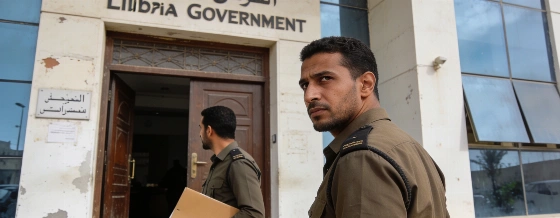
The attempted shakeup has sparked open resistance inside the intelligence service. Reports say the new appointee tried to force his way into the agency's headquarters. Many staff members are still loyal to the ousted Al-Ayeb. The agency is now split, with its leadership in legal limbo and daily operations clouded by uncertainty. This kind of standoff is not new in the region. In Tunisia, the Tunis Afrique Presse (TAP) agency has tracked similar fights over security appointments since the 2021 constitutional changes.
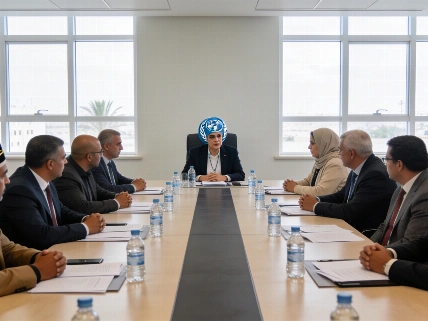
Political leaders have only made things worse. The Presidency Council, led by Mohamed Al-Menfi, announced the changes. But Council member Musa Al-Koni publicly denied backing the move. House of Representatives Speaker Ageela Saleh flatly rejected the appointments. He accused the Council of trying to stir up political trouble by acting alone and skipping talks with other state bodies. The Algerian Press Service (APS) has reported that these kinds of disputes over top jobs have disrupted regional security cooperation before, especially when it comes to sharing intelligence across borders.
Judges show unity as politicians stay divided
The Zawia court's action shows Libya's judges can still act together, even as the rest of the state remains fractured. This stands in contrast to recent cooperation between Algeria and Niger, where state bodies have managed to work together on big projects. In Libya, the fight over the intelligence service has become a stand-in for deeper political rivalries. There is no clear way out. The Moroccan Ministry of Foreign Affairs has called again and again for all Libyan sides to talk, saying that agreement between institutions is key for regional stability.
No court has given the Presidential Council's appointments any legal backing. The court's freeze has stopped the Council's decisions for now, but the political split is still wide open. This episode shows just how fragile Libya's state institutions are, and how moves made without broad support-especially in the security sector-can quickly lead to more instability. Until Libya's leaders find a way to agree, the intelligence service will stay a battleground, not a foundation for national security. For more updates on Maghreb governance, readers can follow the Moroccan state news agency and official bulletins from the African Union.