Delegates from Libya's rival authorities met in Tunisia to move ahead with a UN-backed agreement aimed at holding nationwide elections within two years, as both sides look to end years of division and unify state institutions.
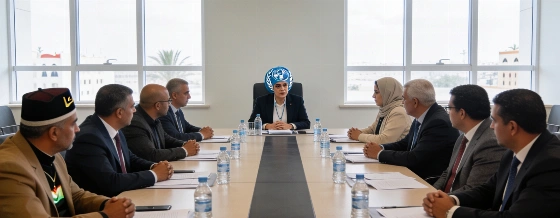
Libya's political stalemate faced another test this week as rival delegations gathered in Tunisia to speed up work on a UN-backed election deal. The agreement, signed in Tripoli on August 30, sets a two-year deadline for national elections and aims to bring Libya's divided institutions back together. The latest meeting, held on September 20 in Tunis, included representatives from both the Tripoli-based Government of National Unity and the eastern General Command. The United Nations Support Mission in Libya (UNSMIL) and observers from the African Union and the Arab Maghreb Union were also present, according to the Tunis Afrique Presse (TAP) agency.
Each side sent four delegates. UN Special Representative for Libya Hanna Tetteh chaired the session, reflecting the international community's ongoing role in Libya's transition. The 4+4 committee, as confirmed by the Algerian Press Service (APS), is tasked with turning the August agreement into concrete steps. This includes restructuring the High National Elections Commission and resolving disputes over electoral laws for both presidential and parliamentary votes. These changes are seen as necessary for credible elections and have been welcomed by UN Secretary-General António Guterres, who called on all Libyan parties to use this opportunity for national reconciliation.
Agreement faces mixed reactions from Libyan institutions
Participants reviewed the positions of key Libyan bodies, including the House of Representatives in Benghazi, which on September 14 unanimously approved the final 4+4 committee agreement. This move, confirmed by several independent agencies, was described as a major step since the August signing. However, the High State Council has not joined in. Its head, Mohammed Takala, has publicly rejected the deal, and the council itself has not issued an official statement. This ongoing split highlights the deep institutional divisions that have long blocked Libya's path to unified government, as reported by regional outlets and the Moroccan news agency MAP.
This was the ninth meeting of the 4+4 committee, but the first since the parties agreed to restructure the national electoral commission and amend election laws. The committee is now working in phases, with the next session set for the first week of October. This step-by-step approach marks a shift from immediate election planning to gradually refining the electoral framework, according to Anadolu Agency and statements from the Tunisian Ministry of Foreign Affairs. The goal is to build broader support among Libya's political groups and ensure that future elections are both inclusive and credible.
Next steps and ongoing challenges
Despite some progress, the way forward remains uncertain. The parties agreed to keep consulting with other Libyan actors to widen support for the deal, a process that has been difficult in the past. The next meeting is planned for early October, with UN-mediated talks ongoing since April to try to break the political deadlock and unify executive authority. Tunisia, which has hosted several rounds of Libyan dialogue, has repeated its support for a peaceful solution, as stated in a recent ministerial statement.
Libya's divided institutions have repeatedly stalled efforts to rebuild state capacity and restore public trust. As reported earlier, even technical projects like border inspection upgrades have struggled to move forward amid political uncertainty. The economic stakes are high: Libya's oil-dependent economy remains vulnerable to disruption, and regional trade with Tunisia and Algeria has not returned to pre-2011 levels, according to the UN Economic Commission for Africa (UNECA).
With the House of Representatives supporting the agreement but the High State Council's leadership opposed, the coming weeks will show whether this latest push can overcome Libya's chronic divisions. Both eastern and western representatives reaffirmed their commitment to the deal in Tunisia, which is a rare sign of alignment. But without wider support, the risk of another political stalemate remains. For now, the process is moving forward, but the real test will be whether these commitments lead to actual elections and unified government-outcomes Libyans have been waiting for over a decade.