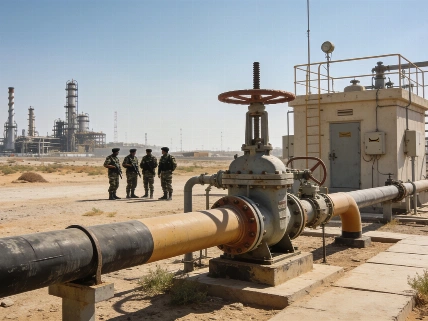

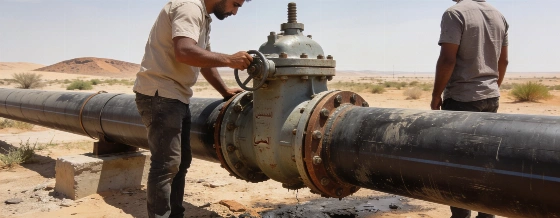
Production at Libya's Sharara oilfield collapsed after an armed group closed a key pipeline valve to al-Zawiya port. The National Oil Corporation confirmed the stoppage, which comes after a series of attacks on Libya's energy sites.
Libya's oil industry faces new trouble after an armed group suddenly closed a main pipeline valve. This move stopped crude from flowing out of the Sharara oilfield to al-Zawiya port and caused production at Sharara to drop fast. The National Oil Corporation (NOC) confirmed the shutdown on 21 September 2026. The company said valve 7 on the Sharara-Zawiya pipeline was closed, which led to a sharp fall in output at the field. The NOC warned that if the blockade stays in place, all production could stop and exports could be badly hit. The Zawiya refinery is also at risk, according to official statements.
Sharara is one of Libya's biggest oilfields. It is a key source for the country's crude exports. The pipeline to Zawiya carries oil from Sharara and other fields, including El Sharara, which makes the whole system open to disruption. When the pipeline is blocked, it can hit several oil assets at once. Argus Media and regional energy analysts have pointed out this risk. The sudden stoppage threatens export volumes right away. It also shows how exposed Libya's energy network is to armed groups. The African Union's Peace and Security Council has raised this issue many times in its reports on regional stability.
Rising attacks on Libya's oil sector
This pipeline sabotage is not the first. Libya's energy sector has seen a wave of attacks in recent weeks. Last month, drone strikes set off fires and explosions at fuel storage tanks in the al-Zawiya oil complex. Another drone hit a tank with untreated naphtha, adding to the dangers for oil workers and facilities. Reuters reported that the Hamada-Zawiya main pipeline was also blocked during this period. The NOC blamed that incident on members of the Petroleum Facilities Guard, the force meant to protect oil sites. These attacks have not just hit Sharara. They have affected a wider network of pipelines and supply lines that are vital for Libya's exports.
The NOC did not say who closed the pipeline or why. This silence leaves oil companies and outside observers guessing. The lack of information adds to the uncertainty for operators and investors who already see Libya as a risky place to do business. The Tunis Afrique Presse (TAP) agency has reported that these incidents send shockwaves through the Maghreb. They affect energy markets and trade across the region, since Libya is a major supplier to Mediterranean refineries.
What's at stake for Libya
Sharara is crucial for Libya's economy. It brings in export money the country depends on. Every attack or shutdown at this field hits Libya's finances and its hopes for recovery. Armed groups and drone strikes keep raising the risks for oil production. Earlier in September, the NOC said Sharara's output was "not significantly affected" and national production was close to 1.4 million barrels per day. But the latest events show things have gotten worse in just a week, as reported by Reuters and confirmed by the Algerian Press Service (APS).
Libya's oil sector has struggled with instability for years. As reported earlier, the government has tried to bring in foreign partners to help keep the industry running despite ongoing attacks and political splits. The United Nations Economic Commission for Africa (UNECA) has said Libya needs stronger security and better governance to protect its oil sites and attract steady investment.
The NOC has not given details on how much production was lost or who was behind the latest shutdown. For now, the future of Sharara is uncertain. What is clear is that Libya's oil network is still wide open to armed interference. Each new attack makes it harder to trust the sector's stability. Until Libya can protect its oilfields and keep operations steady, its role as a reliable oil exporter will stay in doubt.