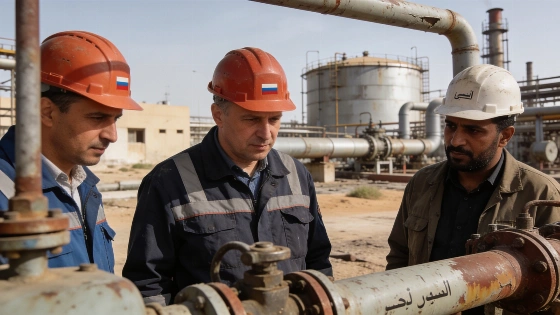
Libya is seeking Russian help to rebuild its oil industry, offering Russian companies direct control over refineries and exports as the country struggles with fuel shortages and political divisions.
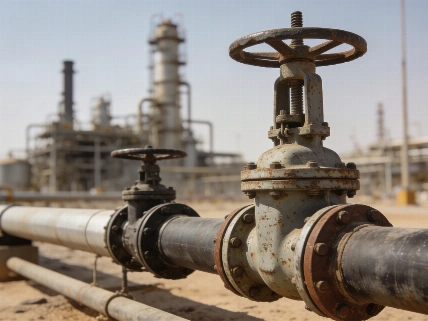
Libya is opening its energy sector to Russian companies, offering them a rare chance to manage oil refining and exports in a country still divided by years of conflict. The government in Tripoli is in talks with Russian firms to restart or build new refineries, promising full operational control and access to both local and export markets. The Libyan National Oil Corporation (NOC) recently reported that three oil sites, including the Hamada and Tahara fields, were shut down after an unauthorized valve closure on the Hamada-Zawiya pipeline. This incident exposed just how fragile Libya's energy infrastructure has become (Reuters).
The offer to Moscow is significant: Russian operators could process up to 380,000 barrels of oil per day, matching Libya's refining capacity before the war. In a region where foreign companies usually face strict limits, the idea of Russian firms running everything from crude intake to gasoline exports marks a sharp change. The Zawiya refinery, one of the few still partly working in western Libya, can handle about 120,000 barrels a day but has been hit by drone attacks and blockades, making the national fuel shortage worse, according to Tunis Afrique Presse (TAP) and regional energy reports.
Energy collapse leads to new partnerships
Libya's energy system is in crisis. Only the Zawiya refinery is partly running, and it was recently damaged by fire. Seven of the country's nine main oil terminals-including Es Sider, Zawiya, Ras Lanuf, and Marsa Al Hariga-are closed. The result is a fuel shortage so severe that even rival groups are now working together to attract outside investment. The NOC has warned that if blockades continue, it may have to declare force majeure, which would further disrupt exports and affect the wider Maghreb energy market, as reported by Algeria's APS news agency.
This approach to Moscow is notable because the Tripoli government does not control most of Libya's oil fields. The most productive sites, including key coastal fields and export terminals, are held by Khalifa Haftar's Libyan National Army (LNA), which opposes Tripoli. Still, both sides are cooperating out of necessity, with neither blocking Russian involvement. This practical stance is reflected in recent statements from the African Union's Peace and Security Council, which has urged Libyan leaders to focus on stability and economic recovery over factional disputes.
Political divisions and Russia's opportunity
Since the 2011 Arab Spring, Libya has been split between the UN-recognized Government of National Accord in Tripoli and the LNA in the east. The divide is clear: Tripoli controls the northwest and a few enclaves, while the LNA holds the east, south, and most of the Mediterranean coast. The southern desert is largely ungoverned, with no oil production and little state presence. The NOC and the Moroccan news agency MAP both note that this fragmentation makes any investment deal dependent on shifting alliances and local security arrangements.
Despite these divisions, both governments now agree on the need for outside money and technical help. In 2024, Tripoli sent officials to negotiate with Tatneft about new refineries in Benghazi and Tobruk-areas under LNA control. The talks went well but stalled for political reasons. With the energy crisis worsening, Russian companies now have a wider opening. The Russian embassy in Tripoli has said Russian firms are ready to help modernize Libyan power plants, oil terminals, and refineries, if there is clear political support and concrete proposals from Libya.
Security, risk, and new leverage
Russia is moving carefully. Officials have said any investment depends on guarantees for the safety of assets and staff, as well as stable supply lines from oil fields to export terminals. The risks are real: Libya's recent past is full of failed projects and sudden changes. But the crisis is so severe that all sides, including local councils and tribal groups, are now willing to work with Russian interests if it means restoring fuel supplies and economic activity. The restart of the Russia-Libya intergovernmental commission after 25 years is seen as an important step for expanding economic ties, according to both governments.
For Russia, Libya's offer is a strategic gain. It gives Moscow a foothold in North Africa's energy sector without direct military involvement, and a chance to influence the region as Western influence fades. The deal also gives Russia leverage over Mediterranean energy flows, which could affect European markets. The UN Economic Commission for Africa (UNECA) has noted that these changes could shift the balance of energy trade across the Maghreb and the wider MENA region.
Libya's willingness to hand over control to Russian firms is not unique. The country has also sought Chinese investment for reconstruction and technology, as reported earlier. The pattern is clear: Tripoli is looking for new partners as Western support fades and local actors focus on survival over ideology.
Libya's energy crisis has forced a practical realignment that would have seemed unlikely a decade ago. By inviting Russian companies to take the lead in rebuilding its oil sector, Tripoli is showing that the old rules no longer apply. The West's intervention after 2011 left Libya divided and exposed; now, Moscow is being offered a central role, not through force but through investment and technical expertise. This is not a symbolic gesture-it is a calculated move by a state in crisis, and a sign that in the Maghreb, power is shifting to those who can deliver real results.