
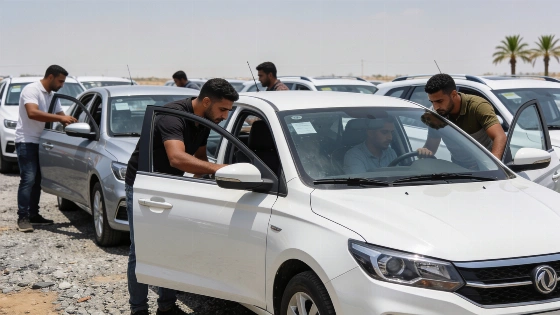
Algeria's car market could see price drops of up to 100 million centimes on some models if Chinese vehicle prices and shipping costs continue to fall, but experts warn that actual outcomes depend on import flows and market realities.
Algeria's automotive sector is experiencing a new wave of competition as Chinese carmakers expand their presence, raising the prospect of significant price reductions for consumers. According to Abderrahmane Hadef, an international economic development adviser, some models could see price drops of up to 100 million centimes if the downward trend in Chinese vehicle prices and maritime transport costs persists. However, Hadef cautions that these projections are market forecasts rather than certainties, with real outcomes hinging on the pace of import flows and evolving market conditions.
Hadef attributes the current price dynamics not only to lower shipping costs but also to China's aggressive commercial strategy. In recent years, Chinese manufacturers have shifted from being importers reliant on foreign expertise to direct competitors of global automotive giants, leveraging technological advances and high production volumes to offer highly competitive prices. This strategic pivot is part of Beijing's broader ambition to establish a lasting global footprint, particularly in emerging markets.
Algeria's Market Attracts Global and Chinese Interest
With annual domestic demand estimated between 150,000 and 400,000 vehicles, Algeria represents a strategic opportunity for international carmakers, especially Chinese brands seeking to expand beyond their traditional markets. Hadef notes that Algeria's market fundamentals make it attractive for foreign investment and long-term industrial development.
In the short term, the government's decision to allow imports of used vehicles less than three years old is seen as a transitional measure to address supply shortages. This policy is expected to ease immediate market pressures while the country works toward developing a local assembly and manufacturing industry.
Gateway to Africa and Regional Implications
China's interest in Algeria extends beyond immediate sales. Hadef argues that Algeria's geographic position and economic potential make it a natural gateway to African markets. The influx of competitively priced Chinese vehicles is part of a broader strategy to establish a durable presence across the continent.
While the import of nearly new vehicles may help balance short-term supply and demand, Hadef emphasizes the need to monitor the macroeconomic impact, particularly on Algeria's trade balance and import bill. The long-term effects will depend on how quickly local industry develops and how the market adapts to increased competition from Chinese manufacturers.