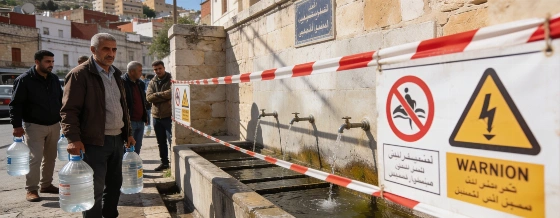
Authorities in Constantine have declared water from 15 public sources unfit for consumption following failed bacteriological tests, imposing bans across four communes until disinfection and further analysis confirm safety.
Authorities in Constantine have imposed immediate bans on the consumption of water from 15 public sources across four communes after laboratory tests revealed bacteriological contamination. The move comes as summer temperatures drive increased reliance on natural springs and public water points, raising public health concerns in the region.
Local officials in Zighoud Youcef, Massoud Boudjeriou, Didouche Mourad, and Beni Hamidane have issued warnings to residents, instructing them to avoid drinking water from affected sources until thorough cleaning, disinfection, and new tests confirm compliance with health standards. The bans will remain in place until authorities can guarantee the safety of the water supply.
Multiple Communes and Sources Impacted
In Zighoud Youcef, four sources-Ain Dekara, Ettouffahta, the Sedah village spring, and Ben Zougar-were found non-compliant with sanitary norms. Residents have been told to stop using these sources immediately, with the ban to be lifted only after successful remediation and follow-up testing.
Massoud Boudjeriou has also reported contamination at three sources: Ain Boutouha (Mechta Bouhassane Abdallah), Bouhassane Abdallah 1 ancienne, and Ain Siki (Mechta Darsoun). The local hygiene and public health services have advised against any human consumption until further notice.
Didouche Mourad authorities have identified five contaminated sources, including Dahdah Alloua (above Dar Kababi), where coliform bacteria were detected, as well as Oum Lemrouj, two Qaraboua Abdelhamid sources (near the mosque and the central cemetery), and Zanchaa. All have been declared unsafe for drinking pending corrective action.
Beni Hamidane joins the list with three sources-Ain Houadef (Mechta Lahouima), Chaïbia, and Ain Bouchdika-now under restriction. Residents are urged to comply with the bans until the sources are rehabilitated and retested.
Causes and Next Steps
Officials in Zighoud Youcef attribute the contamination to several factors, including proximity to agricultural zones, use of the sources for irrigation, and collection by mobile water tankers not intended for human consumption. The aging and deteriorated state of some installations, which have not benefited from recent rehabilitation programmes, is also cited as a contributing factor.
Authorities plan to carry out cleaning and disinfection operations at all affected sources, followed by renewed bacteriological analysis. Only after confirming the water meets health standards will the bans be lifted and residents notified.
Regional Health and Policy Context
This episode highlights the ongoing challenges of water safety and infrastructure maintenance in North African municipalities, particularly during periods of high demand. Similar issues of public health oversight and sector performance have been observed elsewhere in the region, as seen in Mauritania's recent review of its health sector operational plan in Assaba, which aimed to identify and address shortcomings in service delivery (see coverage of Mauritania's health sector review).
For Constantine, the immediate priority is restoring safe access to public water sources. The situation underscores the need for ongoing investment in water infrastructure, regular monitoring, and public communication to mitigate health risks, especially as climate and demographic pressures intensify across the Maghreb.