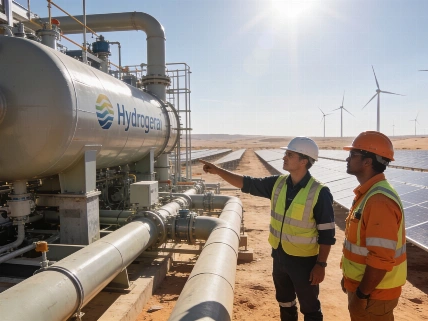

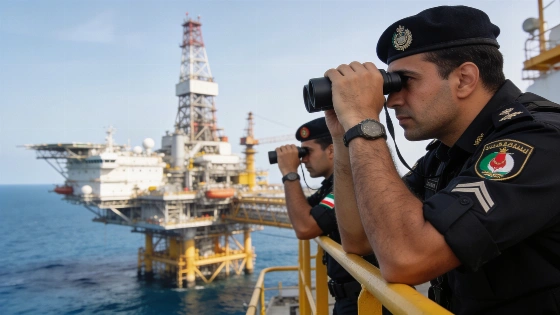
Cyprus, Greece, and Egypt have signed a new defence deal in Cairo to step up protection of gas fields and offshore energy sites in the Eastern Mediterranean. The agreement sets out joint military action and tighter security for key supply routes as regional threats grow.
Cyprus, Greece, and Egypt have drawn a new defensive line in the Eastern Mediterranean. The three countries signed a joint agreement in Cairo to protect their gas fields and offshore energy sites as security threats in the region rise. This pact came out of the sixth meeting of their defence ministers. It marks a shift toward coordinated action to guard the region's most important energy assets. North African countries, including Algeria and Libya, are watching these moves closely. Algeria's Ministry of Energy and Mines has stressed how much regional stability matters for hydrocarbon exports, according to the Algerian Press Service (APS).
The core of the agreement is simple. Cyprus, Greece, and Egypt want to make their energy infrastructure-gas fields, supply lines, and offshore platforms-harder to attack or disrupt. Defence ministers Vasilis Palmas, Nikos Dendias, and Lieutenant General Ashraf Salem Zaher signed a joint statement. They made their priorities clear: act fast, work together, and share intelligence. The pact sets up a permanent system for military coordination. The next round of talks is set for 2027, as reported by Greek and Cypriot media and confirmed by the Egyptian Ministry of Defence.
Joint defence strategy for energy security
The three countries see this cooperation as a key part of keeping the region stable. Their plan is not just talk. The ministers agreed to build up military and defence ties so they can respond quickly and together if trouble hits. They will keep in close contact, hold joint consultations, and swap information and threat reports. These steps are meant to make sure any attack or disruption aimed at energy sites gets a joint response. This approach is in line with recent calls from the Tunisian Ministry of Foreign Affairs for more regional teamwork on maritime security, as reported by the Tunis Afrique Presse (TAP) agency.
The agreement goes beyond energy. The ministers want to work together against terrorism, smuggling, irregular migration, human trafficking, and organised crime. They also want to make sea routes safer. The joint statement says the countries will respect international law, the UN Charter, and the UN Convention on the Law of the Sea. They want to keep their partnership free from outside interference and regional rivalries. The deal also covers joint military drills and new defence technology, showing a wider push in the MENA region for security partnerships built on innovation.
Regional context and operational implications
This move comes as energy routes in the Eastern Mediterranean face more geopolitical risk. The ministers reviewed the security situation and raised concerns about armed conflicts and the risk of these spreading to key infrastructure. The agreement's main goal is clear. Cyprus, Greece, and Egypt will pool their resources and share intelligence to handle both current and new security threats. At the same time, Morocco's Ministry of Energy Transition and Sustainable Development has called for cross-border rules to protect energy corridors. This view is echoed in recent African Union statements on infrastructure security.
For energy companies and investors in the region, the pact means stronger security for important assets. It also sets an example for how Mediterranean countries can work together to manage cross-border risks. The focus on quick response and information sharing is similar to what is happening in other sectors. For example, recent efforts in digital infrastructure have aimed to make systems more resilient against new threats. The agreement also fits with the African Union's 2063 Agenda for integrated infrastructure, as described in official AU press releases.
By setting up this trilateral defence system, Cyprus, Greece, and Egypt are not just protecting their own interests. They are shaping the security setup for the wider Eastern Mediterranean. The agreement stresses sovereignty, territorial integrity, and non-interference. The message is clear: regional energy security will be defended together, not left to chance or outside control. This is a firm step that raises the standard for how countries in the region protect their most important assets.