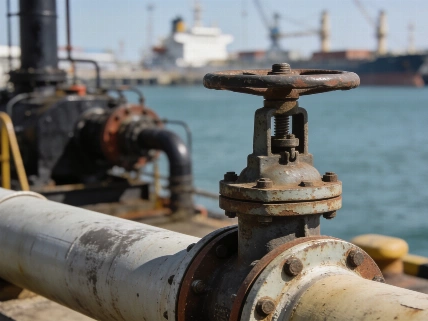
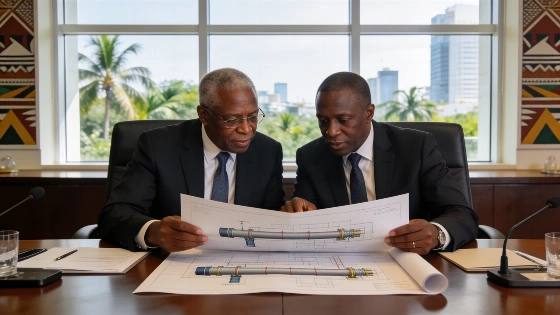
Nigeria is stepping up its push to attract investment for its huge gas reserves, using the Gastech 2026 summit in Bangkok to advance talks on a Nigeria-Libya pipeline and set up a joint technical team to test if the project can move forward.
The Nigeria-Libya gas pipeline has been stuck in technical talks and diplomatic statements for years. Now, Nigeria has used the Gastech 2026 summit in Bangkok to try to bring in investors and formalize work with Libya. This is a real attempt to turn Nigeria's 215.19 trillion cubic feet of proven gas reserves into money and to make the country a bigger player in regional energy. But the pipeline is still just an idea. There is no signed memorandum, no construction date, and no final plan. The Nigerian Upstream Petroleum Regulatory Commission (NUPRC) says Nigeria wants to grow its gas resource base to over 600 trillion cubic feet. If it gets there, Nigeria's role in Africa's energy sector will get even bigger, as the African Union Commission on Infrastructure and Energy has pointed out.
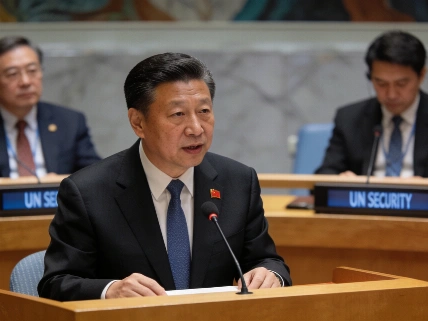
At the summit, Nigeria's Minister of State for Petroleum Resources (Gas), Ekperikpe Ekpo, said Nigeria and Libya will form a joint technical team. This group will try to move the pipeline plan out of the concept stage. Their job is to look at feasibility, financing, infrastructure, security, and whether the project can actually make money. NNPC Limited will lead Nigeria's side, turning diplomatic talk into a real project review. Official statements from both delegations, reported by the Libyan Ministry of Oil and Gas, confirm that the team will also look at security along the planned trans-Sahelian route. Security is a big concern for both Maghreb and Sahelian countries.
Investment drive and regional partnerships
Ekpo told investors, "Nigeria is open for business." He pointed to fiscal incentives and security guarantees to try to win over partners. The Nigerian team in Bangkok met with producers, contractors, and officials from five governments. Key names included Libya's Khalifa Rajab Abdulsadek, Senegal's El Hadji Abdourahmane Diouf, Bangladesh's Iqbal Hassan Mahmood, United States Deputy Secretary of Energy James Danly, Seplat's Effiong Okon, Heirs Energies' Osayande Igiehon, and NNPC's Olalekan Ogunleye. Regional news agencies like Algeria's APS and Morocco's MAP followed the summit closely, showing how much the Maghreb cares about cross-border gas routes and energy security.
Companies laid out their plans. Seplat wants to raise output to 2 billion standard cubic feet per day, with projects like Oso Floating LNG, UTM FLNG, Ibom LNG, and the Qua Iboe industrial park. Heirs Energies has tied its flare sites to the Nigerian Gas Flare Commercialisation Programme, showing how much gas is wasted. Daewoo E&C talked about payment and quality issues for Nigeria LNG Train 7. Bangladesh showed interest in buying Nigerian LNG and crude and wants broader energy ties. The United States and Russia both showed interest in gas investment and technology. Russia suggested holding a yearly Gas Investment Forum and working with the GECF. The NLNG Train 7 project is now over 92% finished and should start by the end of 2027. This project is seen as key for Nigeria's export plans, according to industry updates.
Pipeline progress and persistent obstacles
The Nigeria-Libya pipeline is not a new idea. In April 2026, Libya's Nigeria-Niger-Libya Gas Pipeline Project Committee reviewed engineering studies and talked about a memorandum of understanding with Nigeria. In Bangkok, Ekpo and Abdulsadek agreed to look into an MoU and set up a joint technical team. But they did not announce a signed deal, a cost, or a construction date. The project is still just a proposal. The Tunis Afrique Presse (TAP) has reported that other trans-Saharan energy projects have often been delayed by regional instability and trouble finding money. This shows why strong institutions and multilateral guarantees matter.
Three big problems remain. First, it is hard to find money for large gas projects. The Russian delegation pointed this out. Second, security along the Sahel and Libya corridor has stopped similar projects before. Third, the MoU is still just an idea-both sides have agreed to talk about making one, not to sign it yet.
Still, the record for 2026 shows some movement. There have been committee meetings and engineering reviews in Tripoli, and now a bilateral framework discussion in Bangkok. This is the clearest progress for the project this year. The next test is whether the joint technical team can come up with a project that can actually get funding, instead of just more paperwork. The United Nations Economic Commission for Africa (UNECA) has said that cross-border pipelines like this could change regional trade and integration, but only if political and security risks are handled well.
Export urgency and regional stakes
Nigeria's gas sector has plenty of gas that is not being sold. The government says Heirs Energies' flare sites mean lost revenue. Getting Nigeria LNG Train 7 finished on time is seen as crucial for keeping Nigeria's place in the global LNG market. There is now real pressure to find new export markets. Bangladesh's interest in Nigerian LNG and crude could help Nigeria rely less on European buyers. Senegal wants Nigerian help with local content and building up its own institutions, including work with NNPC, Nigeria LNG, and the NCDMB.
Libya is also looking for international partners, as reported earlier. This shows a wider regional push for cross-border gas projects and sharing technology.
Despite all the diplomatic meetings and technical committees, the Nigeria-Libya pipeline is still a test of whether regional ambition can beat the hard facts of finance, security, and politics. The next step is clear: only a real, fundable project plan with binding commitments will turn this pipeline from an idea into steel in the ground. For now, Nigeria's gas diplomacy is picking up speed, but the real challenge is turning that momentum into working infrastructure for the region.