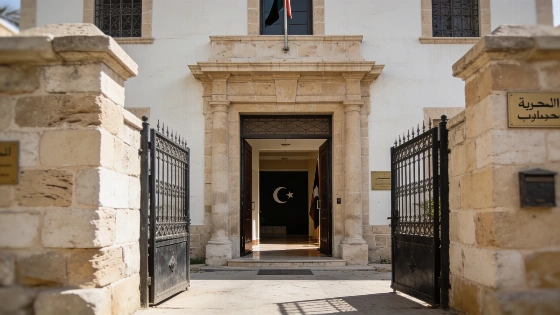
The reopening marks a shift in Cairo's Libya policy after years of support for Khalifa Haftar, the eastern-based commander who rivals the Tripoli-based government. Egypt closed the mission in 2014.
Egypt shut its Tripoli embassy in 2014 as Libya's conflict escalated and rival governments took hold in the capital and the east. On 7 November 2026, Foreign Minister Badr Abdelatty inaugurated the embassy's main headquarters alongside Libya's acting foreign minister, Taher al-Baour, ending a 12-year closure. The reopening restored Egypt's formal diplomatic presence in the capital.
The move marks a shift for Cairo, which had been among the most prominent backers of eastern-based military commander Khalifa Haftar. He is a rival of the Tripoli-based government. Libya's Government of National Unity called the reopening a step that reflects the development of bilateral relations.
A diplomatic shift after years of division
At the reopening ceremony, Abdelatty said the building's historical significance "aligns with the deep-rooted human and cultural ties that characterize Egyptian-Libyan relations." He also said the reopening carried historical and diplomatic significance, according to the Egyptian Gazette's report. Libyan state institutions and agencies supported the renovation of the embassy building.
Libya has faced turmoil since Muammar Qaddafi fell in a NATO-backed uprising in 2011. Its political landscape remains divided between authorities in the east and west. Egypt reopened its mission in Tripoli amid wider discussions about strengthening bilateral ties and expanding cooperation.
Competing authorities remain in place
In the east, the Libyan National Army is under Haftar's command, while the House of Representatives is based in Benghazi. A government led by Osama Hammad is also based there. In Tripoli, Prime Minister Abdulhamid Dbeibeh heads the internationally recognized Government of National Unity, alongside the High Council of State.
Earlier Maghreb Insider reporting examined eastern Libya's power structures in the context of the Libya-Crete route.
On the day of the reopening, Abdelatty also met Dbeibah to discuss economic cooperation, with talks covering trade and investment as well as education and culture. They discussed removing obstacles to commerce. Infrastructure and reconstruction projects were also on the agenda, including a greater role for Egyptian companies in Libya's reconstruction. Egypt's Foreign Ministry spokesman Nader Zaki said Abdelatty reaffirmed Cairo's commitment to Libya's unity and stability, along with its territorial integrity. The two sides also agreed to prepare for the next session of the Egyptian-Libyan Joint Higher Committee, the Egyptian Gazette reported.
Abdelatty called for an inclusive political dialogue led by Libyans and grounded in broad national consensus. He said it should draw on established reference points, including the Skhirat Agreement. A settlement, he said, should be reached "without external interference or dictates," preserve Libya's unity and work toward unifying state institutions. The talks also covered the Turkish-Libyan maritime memorandum of understanding, on which Abdelatty reiterated Egypt's "firm legal position."