A July 2023 memorandum set out a wider EU-Tunisia agenda covering macroeconomic stability, trade and the green energy transition alongside migration and mobility. The EU campaign also recalls the partnership's longer history.
Signed on July 16, 2023, the memorandum laid out an expanded agenda for cooperation between Tunisia and the European Union, covering macroeconomic stability, trade and investment, the green-energy transition, migration and mobility, and people-to-people contacts. The EU described the framework as a "strategic and global partnership."
The memorandum followed discussions involving Tunisian President Kais Saied, European Commission President Ursula von der Leyen, Italian Prime Minister Giorgia Meloni and Dutch Prime Minister Mark Rutte. It is a political cooperation framework, not a treaty or amendment to the existing association agreement. The European Commission's announcement outlines its areas of cooperation.
The EU's communication campaign, titled "The European Union is with you", revisits the relationship with posters tracing key milestones. In a post on its official Facebook page, the EU said "the partnership between the two parties is not limited to agreements and projects, but also encompasses ongoing dialogue, people-to-people exchanges and the strengthening of ties between Tunisians and Europeans".
Relations built over decades
The relationship dates to 1969, when Tunisia and the then European Economic Community signed their first trade agreement. The European Commission opened its mission in Tunis in 1979.
A turning point came on May 17, 1995, when the two sides signed the Euro-Mediterranean Association Agreement. Tunisia became the first country in the southern Mediterranean region to conclude such an agreement with the EU. According to EU institutional materials, it created a framework for political, economic, social and cultural cooperation.
After Tunisia's 2011 revolution, the two sides agreed in 2012 to develop a "privileged partnership" for the country, widening political dialogue and cooperation.
Trade and exchange remain central
The EU identifies itself as Tunisia's largest trading partner and a major source of foreign investment. Cooperation covers trade and investment, tourism and energy, as well as education, training, scientific research and innovation. Academic and cultural links include Erasmus+ and Creative Europe, alongside participation in EU research and innovation programmes.
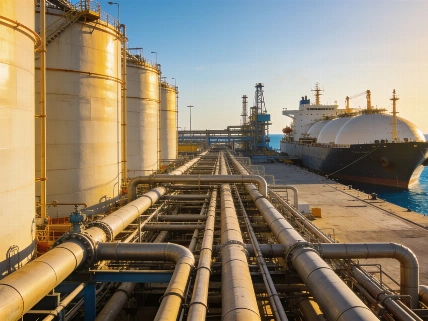
Energy cooperation also covers green-hydrogen development. The proposed SouthH2 corridor is a roughly 3,300-kilometre pipeline project linking North Africa with European markets through Tunisia and Italy. It has been designated an EU Project of Common Interest. Germany has supported Tunisia's hydrogen policy work through a €6 million GIZ project running from 2022 to 2025. In 2024, Tunisia's Ministry of Industry, Mines and Energy launched its National Strategy for the Development of Green Hydrogen and its Derivatives.
Regional investment coverage has also examined Libya's efforts to attract Qatari capital in an earlier report. The 2023 memorandum places migration and mobility alongside economic stability, trade and energy in the EU-Tunisia relationship. The campaign, meanwhile, highlights continued dialogue and people-to-people ties between Tunisians and Europeans.