Tunisia is prioritizing grant funding for climate adaptation as it estimates $55 billion in needs under NDC 3.0. Water projects account for $10.697 billion of the total.
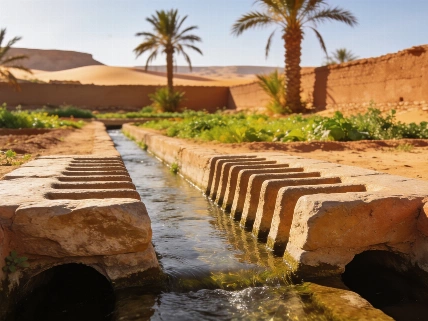
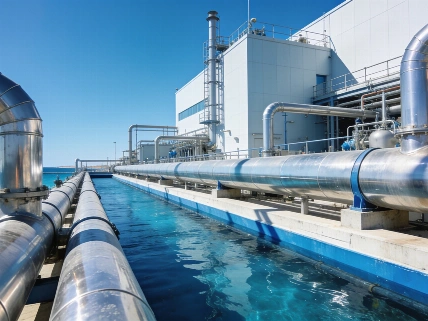
Water alone accounts for an estimated $10.697 billion of Tunisia's climate financing needs, according to Environment Minister HABIB ABID. The country's overall estimate is about $55 billion under its third Nationally Determined Contribution, or NDC 3.0, for 2026-2035, with $29 billion earmarked for adaptation. The United Nations Resident Coordinator in Tunisia described the $55 billion as an investment need covering climate measures, not funds already secured. Another breakdown puts about 53% of the total toward adaptation and 47%, or approximately $25 billion, toward mitigation, as detailed in a United Nations account.
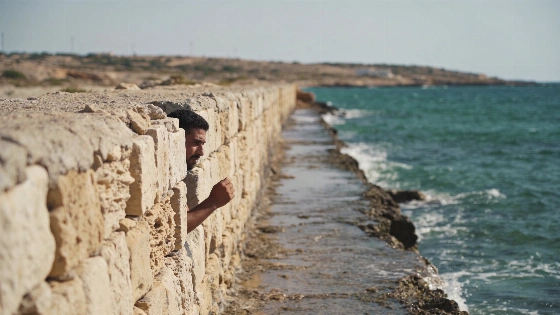
Abid said Tunisia is seeking grants for adaptation projects, citing recent Dutch support of 61 million euros for coastline protection. The NDC estimate also includes roughly $3 billion for capacity building, technology transfer and programme implementation: about $1.85 billion for adaptation and $1.25 billion for mitigation. The energy sector represents approximately $21.7 billion, or 87% of mitigation needs, with investment directed toward renewable energy, efficiency and energy infrastructure, according to figures reported by AllAfrica.
Grants sought amid financing constraints
Speaking to Tunis Afrique Presse (TAP) on the sidelines of COP31 in Antalya, Abid said Tunisia was turning to grants as it faced complex procedures for accessing climate finance and inadequate resources for adaptation in developing countries. Loans account for 67% of public climate financing provided and mobilized by developed countries, compared with about 29% for grants, according to OECD figures. The OECD put total climate finance provided and mobilized for developing countries at $136.7 billion in 2024, up from $132.8 billion in 2023 and $115.9 billion in 2022.
International public adaptation finance to developing countries stood at $26 billion in 2023, less than one-twelfth of estimated annual needs, according to OECD figures cited by The Financial Express. CARE Australia estimated that climate-loan repayments due in 2024 reached $20.1 billion, compared with $6.9 billion in 2020. It projected that, if lending levels and loan terms remained unchanged, annual repayments could exceed new climate lending by 2036.
A separate analysis by Rosa Luxemburg Stiftung North Africa says domestic resources cover around 26% of Tunisia's estimated $55 billion requirement, leaving about 74% conditional on international support and private investment. That amounts to roughly $40.7 billion on the basis of the stated share. These figures describe estimated needs and conditional financing, rather than money already mobilized.
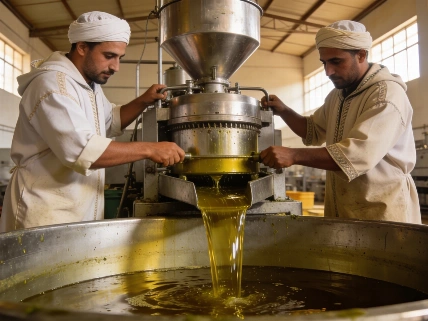
Tunisia is advancing projects tied to national priorities. The Green Belt project, launched in January 2026, is intended to combat desertification. A separate initiative called "Tanit" aims to treat wastewater for reuse in irrigating 12,000 hectares of olive groves and producing livestock feed. It includes plans for six or seven large tertiary treatment plants.
Project priorities and international outreach
Abid identified agriculture and energy as priorities for climate action. Transport was also among the sectors he cited, alongside wastewater reuse and integrated waste management. Tunisia's 2026-2035 climate roadmap calls for faster adoption of non-conventional water resources.
The minister said Tunisia was defending its project portfolio in negotiating groups including the African Group and the Arab Group, as well as the China Group and the G77. He also described COP31 as an opportunity to promote Tunisia's experience and meet organisations that could provide technical or financial support.
During the conference's ministerial phase, Abid said he met officials from the Green Climate Fund. Tunisia is working to complete accreditation of the Deposits and Consignments Fund with the climate fund, following the accreditation of the Agricultural Investment Promotion Agency. The diplomatic outreach sits alongside other regional UN engagement, including Maghreb Insider's Libya diplomacy report.
United Nations cooperation in Tunisia's environmental sector also includes support for water-resource management and drought response. The UN account reports that 3,000 soil samples were collected to establish a soil-fertility reference base, and that 3,200 young people took part in 90 climate initiatives across the country's 24 governorates. The planned UN-Tunisia cooperation framework for 2027-2031 identifies environmental transition, including climate action and protection of natural resources-particularly water-as one of three strategic priorities.
The United Nations Environment Programme estimates developing countries' annual adaptation financing needs will reach $305 billion by 2035. International public financing mobilized for adaptation stood at between $28.2 billion and $31.7 billion in 2024.
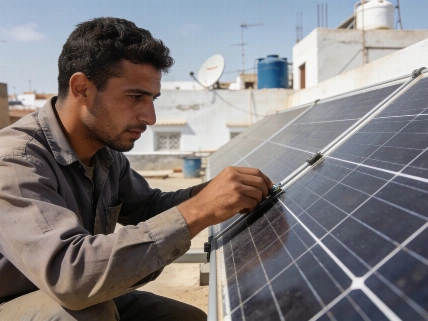
The climate-investment pipeline also includes grid-scale renewable energy. State utility Société Tunisienne de l'Électricité et du Gaz and the European Bank for Reconstruction and Development signed a €50 million financing package for a solar plant integrated with Tunisia's first utility-scale battery-energy-storage system. The project-level package is separate from the estimated $55 billion required under NDC 3.0.