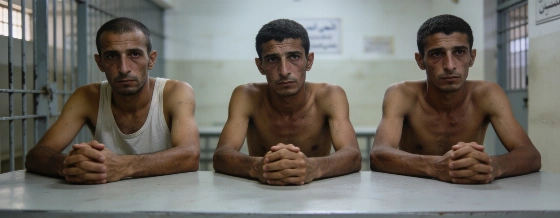
Four Gaza flotilla activists held in Tunisia have started a hunger strike, raising the stakes as a court considers whether to extend their pre-trial detention. The case has drawn criticism of Tunisia's growing pressure on international NGOs.
Four Gaza flotilla activists held in Mornaguia prison have started a hunger strike as a Tunisian court decides whether to keep them in pre-trial detention. Three of the detainees-Ghassen Henchiri, Ghassen Boughdiri, and Nabil Chennoufi-joined Wael Naouar's hunger strike, which has now lasted 26 days. Their protest is a response to months of incarceration. On 11 September 2026, the Economic and Financial Judicial Pole extended their detention by four months, according to the Tunis Afrique Presse (TAP) agency.
The group, known as the Sumud 4, faces charges of money laundering, breach of trust, and forgery, all linked to alleged suspicious financial flows involving the Global Sumud Flotilla. Seven activists were originally detained in March, but three have since been released. Four remain in custody. The case has drawn attention from regional human rights groups and the Tunisian League for Human Rights. Its president, Bassem Trifi, is representing the detainees in court. Trifi argues that the fundraising at the center of the case should be seen as solidarity with Palestine, not a criminal act. He has repeated this position in statements to Al Jazeera and TAP.
Health concerns and legal developments
Regional media report that Wael Naouar's health has worsened after more than three weeks without food. By 10 September, he had lost 18 kilograms and was suffering from low blood pressure, hypoglycemia, breathing problems, and severe difficulty moving, according to Al Jazeera and AllAfrica. The three other detainees began their hunger strike on 9 September, citing solidarity with Naouar as his condition became critical. The Tunisian Ministry of Justice has not commented publicly on their health. The United Nations Economic Commission for Africa (UNECA) and regional civil society groups are following the case closely.
The Economic and Financial Judicial Pole, Tunisia's main body for financial crimes, continues to investigate. The court's decision on 11 September extended the Sumud 4's pre-trial detention by four months, not the six months some observers expected. Local and international NGOs have criticized the ongoing detention and prosecution of solidarity actions, saying it undermines Tunisia's obligations under the African Charter on Human and Peoples' Rights. More details on the judicial process are available in the Tunis Afrique Presse bulletin.
NGO crackdown and international response
The Sumud 4 case comes amid growing state pressure on civil society. Human Rights Watch and regional news outlets report that Tunisian authorities have increasingly used financial and criminal investigations to target NGOs, with at least 47 people prosecuted and 14 convicted in 2025. The Global Sumud Flotilla has called for international support, urging demonstrations and pressure on Tunisian diplomats to demand the activists' release. The Tunisian Ministry of Foreign Affairs has faced questions from European and Maghreb partners about the legal basis for the detentions, as confirmed by recent ministry statements and Maghreb Arab Press (MAP) coverage.
Since 2025, the Global Sumud Flotilla has been repeatedly intercepted by Israeli forces in international waters. Its most recent attempt in May ended with the detention of hundreds of activists and reports of abuse by Israeli personnel. The Sumud 4's imprisonment in Tunisia adds another complication, as the country's crackdown on international solidarity campaigns risks further isolating it from global civil society. Tunisia's handling of the case is now seen as a test of its commitment to civil liberties and the rule of law. By prosecuting solidarity with Palestine as a financial crime, Tunisian authorities are signaling that international advocacy carries new risks. The court's decision will shape not only the fate of the four detainees but also Tunisia's relationship with NGOs and outside pressure.