
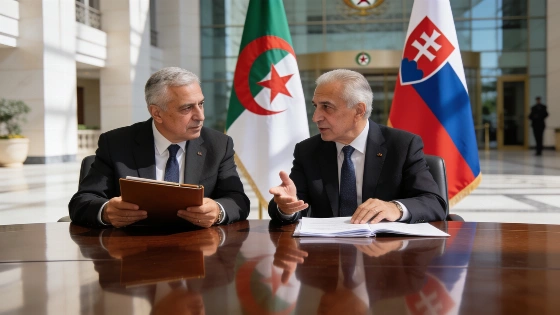
Algeria and Slovakia have announced a new phase of joint cooperation, targeting expanded economic, political, and cultural ties. The move signals a calculated effort to deepen bilateral relations and unlock new opportunities for trade and investment.
Algeria is moving to recalibrate its international partnerships, and the latest signal comes from a formal push to intensify cooperation with Slovakia. This is not a routine diplomatic gesture. Both governments are now positioning themselves to translate years of cautious engagement into concrete joint initiatives spanning trade, investment, and cultural exchange.
At the heart of this shift is a shared recognition that bilateral relations have remained underdeveloped compared to Algeria's more prominent ties with other European states. The new cooperation framework is designed to change that equation, with officials on both sides touting the potential for mutual development and regional stability.
Economic and Political Stakes
For Algeria, the partnership with Slovakia is part of a broader strategy to diversify its international alliances and reduce overreliance on traditional partners. Slovak engagement, meanwhile, offers a gateway to North African markets and a chance to build influence in a region where European competition is intensifying. The cooperation is expected to focus on sectors with immediate growth potential, including trade, investment, and cultural programming.
While the announcement stops short of specifying project timelines or financial commitments, the intent is clear: both countries want to move beyond symbolic gestures and deliver measurable outcomes. This approach echoes Algeria's recent moves to formalize strategic partnerships with other states, as reported earlier in the context of energy and trade summits with Azerbaijan.
Regional Implications and Next Steps
The Algeria-Slovakia initiative is not occurring in a vacuum. As Algeria seeks to expand its diplomatic and economic footprint, new alliances like this one could shift the balance of influence in the Maghreb and beyond. For Slovakia, the partnership is a calculated bet on emerging markets and a test of its ability to compete with larger European players for access and influence in North Africa.
What matters now is execution. Without clear deliverables and follow-through, the risk is that this new era of cooperation will remain rhetorical. But if both sides can convert intent into action, the result could be a rare win-win: Algeria gains a new European partner willing to invest in its development priorities, while Slovakia secures a foothold in a region that is increasingly central to Europe's strategic calculations. The real test will be whether this partnership produces tangible results or fades into the background of diplomatic formalities.