

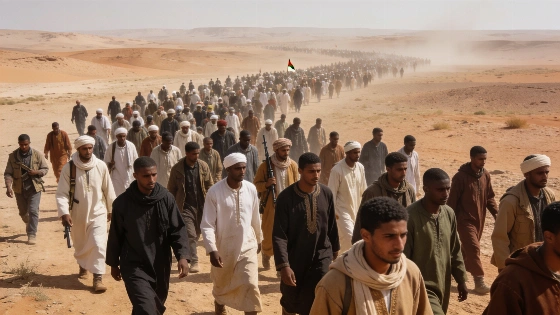
Morocco marked the Green March's 51st anniversary on Nov. 6 as a Security Council standoff over MINURSO's mandate and Rabat's autonomy plan brought the Western Sahara dispute back into diplomatic focus.
Russia vetoed a U.S.-drafted resolution on Oct. 30 that sought to make Morocco's autonomy plan the basis for negotiations and restructure the United Nations Mission for the Referendum in Western Sahara (MINURSO). Eleven members voted in favor, while three abstained. The Security Council meeting record also shows that a competing Russian draft proposing a one-year extension failed to pass, falling short of the nine votes required for adoption.
The Council's failure to adopt either resolution left MINURSO without a renewed mandate after Oct. 31. Established in 1991 under Security Council Resolution 690, the mission was created to prepare and conduct a referendum in which Western Sahara's population would choose between independence and integration with Morocco. Morocco submitted its autonomy proposal in 2007, envisioning self-government for the territory under Moroccan sovereignty.
Morocco's Royal Office said the mandate had expired and called for MINURSO personnel and equipment to leave the southern provinces. Rabat described the development as a significant step toward resolving the dispute, also covered in an earlier MINURSO report.
MINURSO's peacekeeping operations ended after 35 years, and the mission began winding down on Nov. 1. UN peacekeeping chief Jean-Pierre Lacroix said its remaining task was to organize its withdrawal; its former verification functions had ended. The UN said the political track would continue through Secretary-General António Guterres and his Personal Envoy for Western Sahara, Staffan de Mistura. Guterres reiterated the organization's commitment to a just and lasting political solution, mutually acceptable and providing for the self-determination of the people of Western Sahara.
The Russian veto also triggered a General Assembly meeting under the procedure established by Resolution 76/262. The Assembly president scheduled a plenary meeting for Nov. 10 to address the veto cast at the Security Council's Oct. 30 meeting.
Rabat coordinates its response
Morocco's two parliamentary chambers met jointly on Nov. 2, backing King Mohammed VI's approach to the Sahara issue and the kingdom's position on MINURSO's future.
On Nov. 4, Mohammed VI chaired a working session at the Royal Palace in Rabat with Head of Government Fatima Ezzahra El Mansouri and senior officials. He instructed authorities to safeguard national security and coordinate the mission's withdrawal. He also directed them to continue development projects in the southern provinces.
The march and the southern provinces
The anniversary marked the peaceful march launched by the late King Hassan II on Nov. 6, 1975. Some 350,000 volunteers answered his call to enter territory then under Spanish dominion, carrying copies of the Holy Koran and Moroccan flags. The mobilization helped accelerate Spain's withdrawal.
Since Mohammed VI launched a regional development program in 2015, investment in ports, infrastructure, renewable energy and public services has aimed to expand economic activity and regional connectivity. Plans to give landlocked Sahel countries access to the Atlantic, alongside a proposed Africa-Atlantic pipeline, reflect Morocco's ambition to link its southern provinces with African and international markets.







