Israel's October 27 vote could reshape the political space for African partnerships. Morocco is pursuing diplomatic upgrades as South Africa presses its ICJ case and public opposition raises the cost of closer ties.
The Knesset has 120 seats, and any government needs at least 61 for a majority. An Israel Public Broadcasting Corporation KAN poll projected 22 seats for Yashar, led by Gadi Eisenkot, and 20 for Benjamin Netanyahu's Likud. The same poll showed Eisenkot leading Netanyahu as preferred prime minister, 43% to 38%, according to Anadolu Agency.
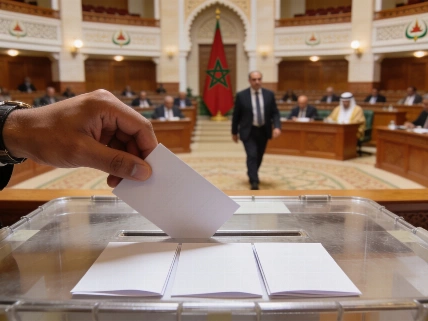
Coalition talks are expected after Israel's October 27 election. Neither major bloc is assured of a majority, and the result could affect Israel's efforts to expand its relationships across Africa as the war on Gaza continues to drive political pressure.
Morocco's diplomatic upgrade faces public opposition
Morocco restored relations with Israel in December 2020 under a US-backed arrangement that included Washington's recognition of Moroccan sovereignty over Western Sahara. The territory remains central to Rabat's diplomatic priorities. The United States and the UN continue to pursue a political resolution to the conflict.
The International Crisis Group reported that Moroccan Foreign Minister Nasser Bourita and Israeli Foreign Minister Gideon Sa'ar agreed in September 2026 to advance relations to embassy level, alongside US Ambassador to the UN Mike Waltz. The group's account of the Western Sahara diplomacy is available in its analysis.
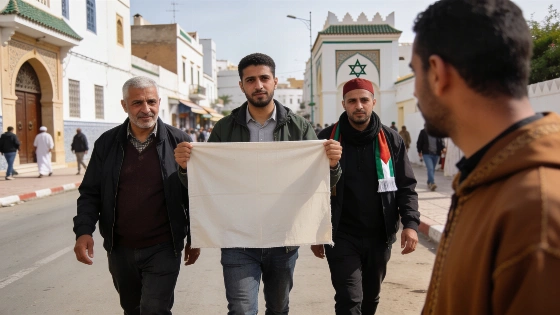
Rabat is pressing ahead despite demonstrations against normalisation. The relationship's exposure to public anger was examined in this earlier report. Arab Barometer figures cited by Noon Post show support for normalisation in Morocco fell from 31% in 2022 to 13% in surveys conducted in 2023 and 2024, a decline of 18 percentage points.
The public mood has shifted sharply.
On September 16, Israeli Foreign Minister Gideon Sa'ar and Moroccan Foreign Minister Nasser Bourita met in New York at a trilateral summit hosted by US Ambassador to the United Nations Mike Waltz. They announced plans to upgrade diplomatic relations, elevate their missions to embassies and appoint ambassadors. The governments also committed to pursuing investment-protection agreements and double-taxation agreements by the end of the year. They said they would expand flights to include Moroccan airlines and arrange reciprocal high-level visits. These are announced commitments, not confirmation that each measure has been implemented.
For Rabat, closer ties sit alongside public opposition to Israel's military campaign. The implications of the election will depend in part on how the next Israeli government approaches Gaza and the Palestinian question.
South Africa and the African Union remain points of friction
South Africa has taken the continent's most prominent legal and diplomatic stand against Israel's war on Gaza. It brought a case at the International Court of Justice alleging violations of the 1948 Genocide Convention. Israel rejects the allegations. The court's provisional measures in 2024 included an order for Israel to act to prevent acts of genocide. They were not a final ruling on whether genocide occurred.
In November 2023, South Africa's National Assembly adopted a motion calling for the government to close Israel's embassy and suspend diplomatic relations. The motion did not itself enact those steps. Chad recalled its ambassador to Israel that month. Other African states have maintained relations despite criticism of the Gaza campaign.
The African Union's dispute over Israel's status has followed a separate institutional track. The AU Commission chairperson accredited an Israeli representative in 2021, prompting objections from member states. In 2022, the AU Assembly formed a committee of heads of state and government to consult on observer status. The organisation moved to suspend the accreditation pending further consideration in 2023.
Idowu Johnson, associate professor of international relations at the University of Ibadan, said African states have handled relations with Israel individually. He said the election could shape cooperation in agriculture and trade, as well as security and technology. Governments, he said, weigh bilateral interests alongside self-determination and international law.
Security and business ties vary by country
The Democratic Republic of the Congo's engagement spans several sectors, but it does not establish that a new security contract has been concluded. President Felix Tshisekedi visited Israel on August 31 and September 1, meeting Netanyahu and President Isaac Herzog. Their discussions covered security and defence. They also addressed agriculture and infrastructure, alongside energy and high technology.
The visit followed memorandums of understanding signed on July 27. Congolese officials said they would review the agreements and explore further investment, including opportunities linked to the Lobito Corridor.
Israel's recognition of Somaliland has exposed political risks for its African outreach. Israel recognised Somaliland as an independent state on December 26, becoming the first country to do so. Somalia and other critics rejected the move as a challenge to Somalia's territorial integrity. President Hassan Sheikh Mohamud told Al Jazeera that Somalia would not accept an Israeli presence "under any circumstances". He also alleged Israel planned a naval base in Berbera and intended to use the city's airport.
ACLED recorded 110 demonstrations directly linked to the recognition by the time of its February 2026 Africa overview. Seven supported the move, all in Somaliland; the rest opposed it. The count covers protests tied to that decision, not overall African opinion of Israel.
Trade and development offer another route for engagement. Israel opened a resident embassy in Lusaka in August last year after a 52-year absence. It identified agriculture and water management as potential areas for closer cooperation, along with health, education and technology. Claims that the move aimed to counter South Africa's regional influence are an analyst interpretation, not an established explanation for the relationship.
The next Israeli government's policy on Gaza and the Palestinian question will test whether diplomatic and commercial engagement can advance while opposition persists.
South Africa's position also has historical roots. Iwebunor Okwechime of Obafemi Awolowo University said Israel's support for the apartheid regime and its refusal to support the struggle against minority rule remain important context for relations today.