
A 200,000-ton grain silo project at Julyana Free Zone is set to transform food security and port logistics, with advanced Belgian equipment and new infrastructure promising a major boost to Libya's strategic reserves and job market.
Construction crews at Julyana Free Zone are racing to finish a 200,000-ton grain storage complex that will redefine Libya's food security landscape and port logistics. The project, now in its final phases, is not just about steel and concrete-it's about whether Libya can finally build a reliable buffer against supply shocks and market volatility.
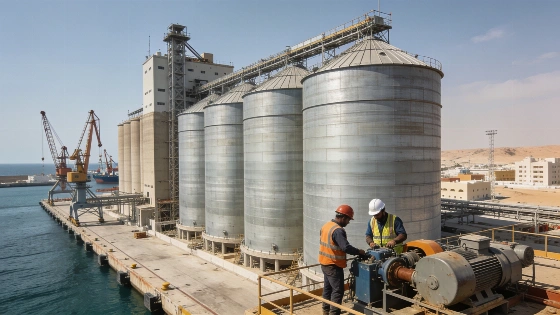
At the heart of the initiative are twenty cylindrical steel silos, each capable of holding 10,000 tons of grain. The site, sprawling across nine hectares beside Berth No. 3, is engineered to handle wheat, barley, corn, and soybeans-commodities that underpin the country's food supply and price stability.
Strategic Reserve and Port Modernisation
Engineer Mohamed Abdel-Salam Ben Attia, General Manager of the Grain Silo Project, calls the development a "strategic national undertaking." His team's mandate: create a robust reserve to guarantee regular food supplies and insulate the market from external shocks. The port's new handling capacity is a leap forward, with two Belgian-made Vigan grain suction units, each moving up to 600 tons per hour, enabling rapid unloading and transfer from vessels directly into storage.
But the project's ambitions extend beyond storage. A national contractor is building a dedicated 30/11 kV electrical substation to power the entire operation, while new administrative offices and a maintenance workshop-stocked with machinery and spare parts-are being readied to ensure the silos run without interruption. This is infrastructure designed for resilience, not just capacity.
Economic Impact and Workforce Expansion
Once operational, the complex is expected to create 200 to 300 jobs spanning handling, operations, administration, and security. For a port city hungry for stable employment, these are not abstract numbers-they represent a tangible shift in local opportunity and skills development.
Ben Attia insists the project is on track for completion within a year, with construction "progressing steadily." The Free Port's management is betting that this investment will not only secure food supplies but also position Julyana as a critical logistics hub in the region's grain trade.
Libya's chronic vulnerability to supply disruptions has long been a source of economic and political risk. By investing in high-capacity, modern storage and handling infrastructure, Julyana Free Zone is making a calculated move to break that cycle. The real test will come when the first grain shipments arrive and the system is put to work under pressure. If the project delivers as promised, it will mark a rare instance of Libyan infrastructure keeping pace with the country's strategic needs-an outcome that, for once, could put the port ahead of the curve rather than scrambling to catch up.