Kenya and Morocco have launched the fourth phase of their cochlear implant programme, aiming to treat 100 Kenyan children and deepen medical skills transfer. The initiative highlights South-South health diplomacy but leaves questions about Kenya's national capacity and future targets.
Kenya's effort to build its own capacity for cochlear implantation is now being put to the test in Morocco, where the latest phase of a joint programme is underway. Launched in Nairobi on 5 November 2025, this fourth phase covers 100 Kenyan children with profound deafness-70 treated in Kenya, 30 in Morocco. The programme is part of a broader South-South cooperation framework, shaped by the priorities of both the Moroccan Ministry of Health and Social Protection and Kenya's Ministry of Health. Both ministries have emphasized skills transfer and sustainable medical development in recent statements reported by MAP and KBC.
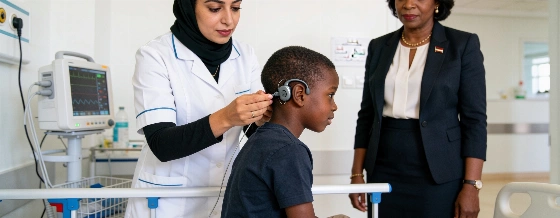
On 15 September 2026, First Lady Rachel Ruto and Principal Secretary for Medical Services Dr. Ouma Oluga visited Kenyan and Moroccan children receiving cochlear implants at Mohammed VI International University Hospital in Rabat. Their visit, which began the previous day, was hosted by Princess Lalla Asmaa, president of the Lalla Asmaa Foundation, and included a luncheon at the Royal Guest Palace with Kenya's Ambassador Jessica Gakinya and foundation delegate president Karim Essakalli. According to the Kenyan Embassy in Rabat, this high-level engagement is meant to reinforce bilateral commitments to inclusion, dignity, and equal opportunities for children with hearing impairments, as highlighted by official statements published by The Star and covered in regional diplomatic news.
Programme design and regional reach
The United, We Understand Each Other Better programme, now in its fourth phase, is the result of Kenya-Morocco medical exchange. Of the 100 Kenyan children included, 10 have already completed the care pathway in Morocco, following the same process as local patients, according to Arabic-language reporting by iHata. On the Moroccan side, the NASMAA campaign run by the Lalla Asmaa Foundation has now provided free cochlear implants to 1,050 Moroccan patients-surpassing its original target of 1,000 and, for the first time, including adults aged 41, 56, and 62. This milestone was noted in a recent Médias24 report and fits with Morocco's broader health diplomacy goals under King Mohammed VI's vision for Africa and the MENA region.
This cooperation has opened Moroccan expertise to children from 22 countries across Africa, the Middle East, and Latin America, making the Kenyan partnership part of a wider South-South health effort. For Kenya, the stated goal is not charity but the transfer of surgical and therapeutic skills. Dr. Oluga has described the programme as a way to build specialized medical capacity and expand access to care at home. The programme has also provided training for Kenyan specialists from Kenyatta National Hospital, Kenyatta University Teaching, Research and Referral Hospital, Moi Teaching and Referral Hospital, and MP Shah Hospital, as reported by the Kenya Broadcasting Corporation and referenced in recent African Union health sector briefings.
Capacity building and unanswered questions
While the programme focuses on skills transfer-training surgical and therapy teams alongside providing devices-the scale of Kenya's domestic need is still unclear. Neither the official visit coverage nor available programme materials give a baseline figure for Kenyan children waiting for cochlear implantation, or a timeline for expanding national services. The 100 children treated in this phase is a significant step for their families, but the broader impact will depend on Kenya's ability to set targets, train teams, and fund operating theatre time in its own hospitals. The Ministry of Health in Nairobi has repeated its commitment to partnerships that promote skills transfer and strengthen specialized medicine, as noted in recent press statements and official communiqués distributed by the UN Economic Commission for Africa.
The Rabat visit shows that the cooperation is working and that the foundation-driven pipeline can treat 100 children at a time. However, without clear national targets or data on unmet need, Kenya's commitment to expanding access remains a work in progress. The real test will be whether this partnership can move beyond symbolic diplomacy and deliver lasting, measurable improvements for children across Kenya. For now, the initiative is a promising but incomplete answer to a challenge that Kenya has yet to fully define in public. For more details on Morocco's health sector initiatives, see the Moroccan Ministry of Health portal.