After a deadly mass crossing at Ceuta left over 100 dead, Morocco and the EU are forced to rethink their migration partnership. A proposed Diaspora Fund aims to channel remittances into local investment, targeting the roots of youth emigration.
When thousands crossed from Morocco into Ceuta in July 2026, the event exposed deep flaws in how Europe and Morocco handle migration. The European Parliament's research service reported that about 80,000 people entered Ceuta on July 30, 2026. At least 72 deaths were confirmed, with later estimates rising above 111. The chaos was made worse by a surge of online disinformation. Early reports put the death toll between 34 and 41, but the numbers kept climbing, highlighting how fragile the current border system is-even after years of heavy spending and diplomatic patchwork (EPRS).
For years, the European Union has spent over a billion euros on Moroccan border control, hoping fences and patrols would slow irregular migration. The Ceuta disaster showed that this approach only treats the symptoms. On September 10, 2026, Morocco's Ministry of Foreign Affairs and African Cooperation officially denied any role in the mass crossing, saying there was no evidence of state involvement and warning against Morocco being pulled into Spain's internal politics, as reported by Reuters and the Moroccan state news agency MAP.
Shared responsibility and the failure of deterrence
The July 2026 crisis was not the result of a single decision. Spanish intelligence had warned both Madrid and Moroccan officials about plans for a mass crossing involving more than 70,000 people just a day before it happened, according to declassified documents. Still, the response was slowed by diplomatic tensions and gaps in coordination. Morocco's Ministry of the Interior pointed to the impact of viral social media rumors, while Spanish authorities cited a Supreme Court ruling and a spike in regularization applications as factors. The crisis unfolded during a sensitive period, with some analysts noting its timing near Prime Minister Pedro Sánchez's visit to Algiers, though official sources, including the Algerian Press Service (APS), found no direct link.
Both Rabat and Madrid focused their public statements on criminal networks and disinformation, avoiding the deeper economic and social issues at play. The European Commission responded by sending €114.7 million in emergency aid to Spain-€82.7 million from the Asylum, Migration and Integration Fund (AMIF) and €32 million from the Instrument for Border Management and Visa. Yet, the European Parliament noted that most people who entered Ceuta were sent back to Morocco within days, exposing weaknesses in border reception, security, and Schengen coordination (Morocco World News).
Moroccan youth and the roots of migration
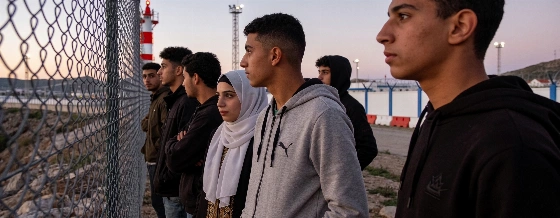
Moroccan migration is driven by ambition, not escape from war. The country is stable, and its youth are educated and connected to the world, but the local job market cannot keep up. In 2025, unemployment among 15- to 24-year-olds reached 38.4%, and among university graduates, 25.7%, according to the Haut-Commissariat au Plan (HCP). Remittances from Moroccans abroad topped $11.7 billion in 2024-over 8% of GDP-but only 10% of that money goes into private investment at home, a figure King Mohammed VI has called unacceptable in official statements. Development programs have missed the regions most affected by emigration, such as the Rif, Al Hoceima, Nador, and the Southeast, with most investment still focused on the Casablanca-Tangier-Rabat corridor. This regional gap is regularly noted by the Ministry of Economy and Finance and the UN Economic Commission for Africa (UNECA).
Strategic partnership or transactional dead end?
Morocco's cooperation on migration is not just a technical arrangement-it is a geopolitical bargaining chip. Any lasting agreement must take Rabat's strategic interests into account, including sensitive issues like Western Sahara, and move beyond simply paying for border control. Recent statements from the Moroccan Ministry of Foreign Affairs and the European External Action Service call for a permanent strategic dialogue between Rabat, Madrid, and Brussels. On September 16, 2026, European Commission President Ursula von der Leyen said, "the border in Ceuta is a European border" and promised to strengthen Frontex and introduce a new emergency system for faster migrant returns. The crisis has also affected the wider Schengen area, with Spain keeping border controls with Italy in place until at least October 8, 2026, according to Reuters and Tunis Afrique Presse (TAP).
Europe cannot rely on funding and security measures alone. Real progress will require legal pathways for work-both seasonal and skilled-direct investment in Morocco's emigration regions, and a stronger, more stable partnership with Morocco inside the EU framework, insulated from diplomatic flare-ups.
The Diaspora Fund proposal
A new proposal at the center of this debate is the Diaspora Fund for Moroccans Abroad (MDM), inspired by Dr. Anis H. Bajrektarevic's "Diaspora Hedge Fund" idea. The fund would direct part of diaspora remittances into productive investment in the regions most affected by emigration, using sovereign guarantees, multilateral development banks, and dedicated financial tools. The plan is built on four principles: targeting specific regions, local co-governance, working alongside existing remittances, and fitting into the broader strategic partnership. The Ministry Delegate for Moroccans Living Abroad has shown support for such efforts, as long as they are rooted in local governance and transparency.
This is not just a policy paper. Without real safeguards, the fund could become another disconnected financial tool, benefiting elites and missing the real reasons people leave. The aim is not to take remittances away from families, but to open new channels for productive, lasting investment. The African Union's Migration Policy Framework for Africa also stresses the importance of involving the diaspora in development strategies.
What to watch next
Success will not be measured by the size of the fund, but by how many young Moroccans find real opportunities at home-without last-minute deals or crisis responses. As Morocco and the EU try to move from managing emergencies to building a real partnership, the stakes are clear: stability, regional development, and mutual recognition must become the foundation of a lasting agreement. The region's future depends on whether these interests can finally be aligned, instead of being renegotiated after every border tragedy. For more on Morocco's broader strategy, see our earlier coverage of its expanding international partnerships.
The Ceuta crisis is a clear warning for policymakers: border fences and emergency funding cannot replace a grounded strategy that addresses the hopes of Morocco's youth and the realities of the Mediterranean. The Diaspora Fund proposal will test whether Europe and Morocco are ready to move past short-term fixes and build a partnership that can handle the next crisis-because another test is coming.