
Tunisia is moving to bring private real estate developers into its social housing programmes, aiming to diversify supply for low- and middle-income households and accelerate delivery through greener construction and reduced bureaucracy.
Tunisia's government is betting that private real estate developers can help expand and diversify the country's social housing stock-something public operators have struggled to do on their own. The Ministry of Equipment and Housing, led by Slah Zouari, has formally invited private investment into the sector, opening a new chapter in housing policy. This move follows a wider trend in the Maghreb, where governments are turning to private and off-budget solutions to address social and economic needs, as noted by recent policy reviews from Tunis Afrique Presse (TAP) and the UN Economic Commission for Africa.
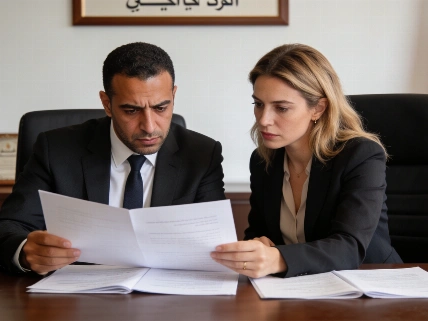
The Foprolos programme, which supports housing for salaried workers, is central to this shift. In a recent meeting with the National Chamber of Real Estate Developers, led by vice-president Hechmi Miliani, the ministry discussed how private developers could join Foprolos projects and other social housing efforts. The aim is to offer more choices for low- and middle-income Tunisians, while keeping homes affordable and up to standard. According to a recent statement from the ministry, talks focused on expanding private sector involvement, but did not set quotas, deadlines, or budgets.
Energy efficiency and administrative reform on the agenda
The ministry wants more than just additional units-it wants them built differently. New technical guidelines discussed at the meeting include energy-efficient construction and systems for collecting and reusing rainwater. These measures are meant to lower energy costs and improve climate resilience for both residents and the state. Zouari, who also oversees industry, mines, and energy, stressed the need to address the administrative and technical obstacles that have slowed projects in the past. This focus on sustainability echoes recommendations from the African Union, which calls for climate adaptation and resource efficiency in North African housing policy.
Despite the talk of innovation, the ministry's statement after the meeting was cautious. No new targets, deadlines, or funding commitments for private participation were announced. Instead, the ministry and the developers' chamber agreed to meet regularly and work on a joint action plan, leaving the details of private involvement to future negotiations. TAP noted that this approach is deliberate: the government wants to build consensus and make sure private sector entry is transparent and in line with national priorities.
Testing the model against public delivery
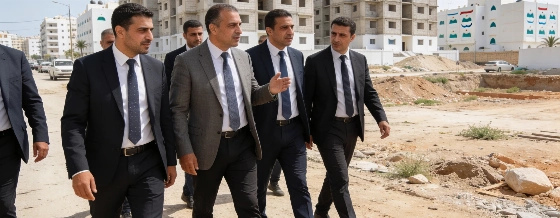
This policy direction builds on a January 2026 decision, when a restricted ministerial council chaired by Prime Minister Sarra Zaafrani Zenzri approved an executive plan for social and intermediate housing. That plan, reported by Webdo, allocated state land at symbolic cost to public developers SNIT, SPROLS, and AFH, and promised a digital platform for transparent application management. The 2026-2030 pipeline includes about 5,000 dwellings at a projected cost of 750 million Tunisian dinars, with an initial batch of 1,213 units across 11 governorates set to start in 2026. However, official data published by Le Temps and referenced by the ministry show that, in a parallel state incentive programme, only 55 out of 255 registered projects were operational by August 2025, and just 63 had received funding by year-end. This highlights that implementation, not planning, is Tunisia's main challenge.
Tunisia's move to involve private developers follows regional trends-Libya, for example, has recently reached out to Chinese partners for reconstruction, as reported earlier. Still, Tunisia's approach is cautious. The ministry's statement signals intent, not execution: no pilot projects have been named, and the only immediate result is a plan for further talks. Regional observers, including the Moroccan news agency MAP, have pointed out that similar public-private housing efforts in the Maghreb often depend on clear regulations and reliable state guarantees.
Editorial analysis: a cautious but necessary pivot
Bringing private developers into Tunisia's social housing sector is a practical response to supply shortages and the need for climate-adapted construction. But the lack of concrete targets or pilot projects in the latest announcement shows the government is still feeling its way forward. Until the terms of private participation are set and results start to appear, the promise of faster, greener, and more varied housing remains just that-a promise. For now, the main outcome is a policy opening and a signal to the market: private capital is welcome, but the rules are still being worked out.