
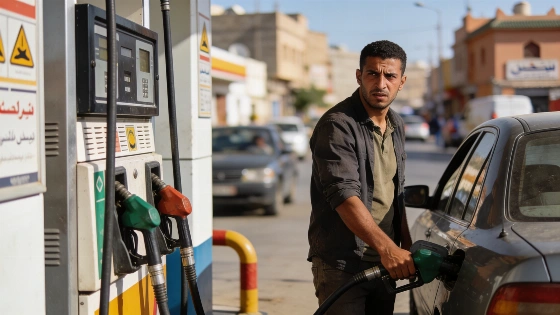
Diesel now costs more than gasoline in Morocco, reaching up to 15.35 dirhams per litre after a series of summer price hikes. The increase is squeezing households and transport operators, driven by global supply disruptions and rising oil prices.
Moroccan drivers are now paying more for diesel than for gasoline, with prices at the pump climbing to around 15.35 dirhams per litre. This rare reversal follows a summer of steady fuel increases, leaving motorists and transport operators facing higher costs. The Ministry of Energy Transition and Sustainable Development tracks these changes and regularly updates the national fuel market, according to the state news agency MAP.
The latest price change, effective Wednesday, 16 September, raised diesel by 0.34 dirhams and gasoline by 0.27 dirhams per litre. Reports from Le Matin and Le360 put diesel between 15.30 and 15.35 dirhams per litre, while gasoline is just above 15.20 dirhams. These prices can vary by company, station, and city, since distributors set their own rates and logistics affect costs. The Ministry of Economy and Finance has pointed out that Morocco's full reliance on imported refined petroleum products makes it especially vulnerable to global market swings.
Global supply shocks drive local pain
The price surge in Morocco reflects wider turmoil in global energy markets. On 15 September, Brent crude traded above $107 a barrel after an 8 percent weekly jump, following attacks on Saudi energy infrastructure that shut down the East-West Pipeline. Morocco, which imports all its refined fuels, is directly affected by these disruptions. Le360 notes that diesel exports from Russia and the Gulf have dropped by 1.6 million barrels per day since February, while European gasoline refining margins topped $62 a barrel in early September. In the US, diesel prices crossed $6 per gallon for the first time on 10 September, highlighting the global squeeze on refined products. The International Energy Agency (IEA) has warned that the supply gap for oil products could widen if Gulf disruptions continue, a concern also raised by the United Nations Economic Commission for Africa (UNECA) in its recent energy outlook.
For Moroccan households, the impact is immediate. Filling a 50-litre diesel tank now costs about 17 dirhams more than before the latest adjustment, and 137 dirhams more than in mid-July. Gasoline users are also paying more, with a 0.27 dirham increase per litre this week. The diesel-gasoline price flip points to both higher crude costs and a shortage of refined diesel on the world market-a situation last seen in Morocco in March 2022, after the start of the Ukraine war. The Ministry of Energy has acknowledged that Morocco's exposure to international price swings is worsened by the lack of domestic refining since the Samir refinery closed in 2015, a point often raised in official statements and parliamentary debates.
Relentless summer of increases
Since mid-July, diesel prices have risen by a total of 2.74 dirhams per litre, according to Le360. The increases-0.69 dirhams in mid-July, 1 dirham in early August, 0.65 dirhams in mid-August, 0.06 dirhams on 1 September, and now 0.34 dirhams-have kept steady pressure on consumers. The latest hike follows a small increase at the start of the month, which left gasoline unchanged but pushed diesel higher. Now, both fuels are rising together, with diesel leading. The Tunis Afrique Presse (TAP) agency reports similar trends in Tunisia, where authorities also cite international volatility and regional supply constraints as reasons for recent fuel price changes.
Neither Hespress nor Le360 report any government action to soften the impact. Because distributors set pump prices, changes in international markets and refining margins are quickly passed on to Moroccan consumers, with only local logistics costs providing some buffer. This means global volatility is felt directly at the pump, with little protection for households or businesses. The Moroccan Competition Council has previously called for more transparency in pricing, but as of September 2026, the government and the Ministry of Energy Transition and Sustainable Development have not announced new regulatory measures. For official updates on fuel pricing and energy policy, readers can check the Ministry of Energy portal.
While Morocco is working to become a hub for synthetic and renewable fuels, as previously reported, for now, imported diesel and gasoline remain essential for daily transport and commerce.
What to watch next
With two price hikes in just over two weeks and a summer increase of 2.74 dirhams per litre for diesel, Morocco's fuel market is now exposed to global supply disruptions and refining bottlenecks. Whether the next adjustment brings relief or more pain will depend on international oil markets, especially as supply from key exporters remains tight. For Moroccan consumers and businesses, cheap fuel is no longer the norm, and the country's vulnerability to global energy shocks is now clear at every filling station. With the government staying out of price-setting, households and the transport sector are left to absorb the full impact of international volatility. For regional context and comparative data, the Algerian Press Service (APS) regularly publishes updates on Maghreb-wide energy trends and fuel trade flows.