

A Security Council vote scheduled for October 29 concerns the proposed future of MINURSO and Morocco's autonomy plan. The ministers also reviewed bilateral trade and possible LNG and green hydrogen cooperation.
Established in 1991 after a ceasefire between Moroccan forces and the Polisario Front, MINURSO could see its role changed by a Security Council resolution scheduled for a vote on October 29.
Sergey Lavrov and Nasser Bourita discussed the draft during a telephone call on October 23, held at Morocco's request. The ministers also reviewed bilateral relations and preparations for the Third Russia-Africa Summit, scheduled for October 28 and 29 in Moscow.
A proposed change to the UN mission
The draft is expected to advance a final settlement based on Morocco's expanded autonomy plan under its sovereignty. Russia abstained on the previous resolution without using its veto. An abstention is distinct from a veto: under UN General Assembly procedure, the Assembly must meet within 10 working days after a Security Council veto, a rule in operation during its 81st session. The proposed text would imply Moroccan sovereignty over Western Sahara and could change the format of the UN presence there.
The United Nations has previously considered the Polisario Front the legitimate representative of the Sahrawi people and maintains that they have a right to self-determination. Those positions sit alongside Morocco's autonomy proposal in a dispute whose political and legal status remains contested.
Resources and contested control
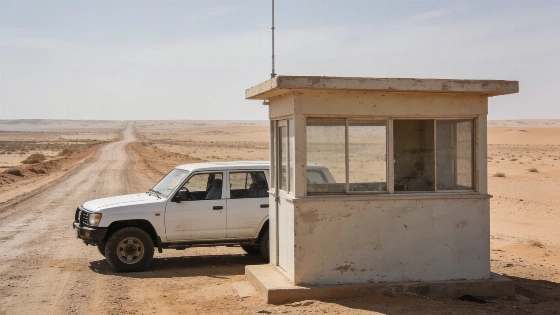
Western Sahara covers 272,000 square kilometres and has a population of about 600,000. Morocco primarily controls and exploits about 80% of the territory, information from the supplied account. The region has large phosphate deposits and access to impressive West African fishing grounds; its resource management remains disputed.
Morocco uses newly built renewable-energy grids in the territory primarily to power phosphate mining. A report on Dakhla projects also examined how resource extraction and transport links relate to Moroccan control and the position of Sahrawis.
Trade and potential energy links
In August, Russian Ambassador Igor Belyaev valued bilateral trade at US$2 billion and described it as fairly static. Russia supplies Morocco with agricultural raw materials and industrial and chemical products, including urea. Russian firms also export medicines, vaccines and pesticides; Moroccan exports to Russia include fruit, vegetables and seafood.
Belyaev said work was under way to broaden the range of goods, including through halal certification. He said, "political dialogue between Russia and Morocco is at a high level. At the same time, I believe that the potential of trade and economic cooperation has not yet been fully realised and does not correspond to the level of political relations."
He identified liquefied natural gas and green hydrogen as potential areas for cooperation. Moroccan projects to build LNG receiving and regasification infrastructure could create conditions for new suppliers to enter the market. The Security Council vote is scheduled for October 29.







