The new chamber gives Libyan and Chinese firms a formal channel to pursue partnerships and investment, with priorities spanning infrastructure and industry, as well as trade and technology; no individual projects were announced.
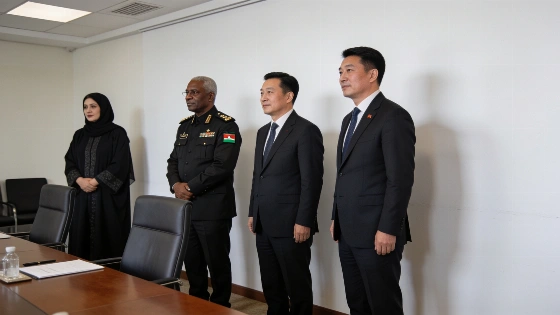
Libya and China inaugurated a joint business chamber in Tripoli in October 2026, opening a formal channel for engagement between companies and organizations in the two countries. Economy and Trade Minister Suhail Abu Shiha and Chinese Ambassador to Libya Ma Xueliang attended the ceremony. Also present were Mohamed Al-Raied, chairman of the General Union of Libyan Chambers of Commerce; Abdul-Moneim Mohamed Saleh, undersecretary of the Ministry of Housing and Reconstruction; and Al-Amin Al-Bakoush, the chamber's executive director. Libya Herald reported the inauguration on the General Union's account.
The General Union describes the chamber as an institutional framework to improve communication between the two business communities and widen cooperation in trade, economics and investment. Its remit includes infrastructure and industry, along with trade, technology, technical expertise and knowledge exchange. It aims to strengthen the private sector's role in Libya's economic development.
A formal route for business engagement
The chamber is intended to help companies identify commercial opportunities, find potential partners and develop joint ventures. The General Union says it will work to expand trade and encourage joint investment, while facilitating direct contact between businesspeople and investors in both countries.
Its priorities span infrastructure and industry, as well as trade and technology, alongside other areas of mutual interest. The initiative is also intended to support the exchange of technical expertise and knowledge.
Investment opportunities depend on projects
The chamber's launch came amid other reported Chinese-Libyan business activity. In July 2026, eastern Libya's National Development Agency signed 13 contracts with Chinese companies to develop the Magroun Industrial Zone, a 1,000-hectare site south of Benghazi. The proposed sectors include infrastructure and construction materials, renewable energy, electrical and mechanical industries, chemicals, textiles and electronics, according to MOHENG's account.
In October, Libya's Development and Reconstruction Fund chief Osama Hammad met a Chinese delegation that included the head of the West Asia and North Africa department at China's Ministry of Foreign Affairs. The discussions covered infrastructure and reconstruction, as well as utilities and basic services. Separately, Libya's Ministry of Oil and Gas held preliminary talks with Consolidated Contractors Company and China's Jereh Oil & Gas on possible cooperation and investment in the Libyan market, as reported by Libya Herald.
Closer economic engagement could help Libya attract capital and develop infrastructure. The General Union has also identified expanded industrial capacity as an opportunity. Chinese companies could pursue work connected to reconstruction and economic diversification.
The chamber adds a business-focused channel to Libya's external engagement. A Maltese delegation's discussions in Benghazi included trade links, as described in an earlier regional briefing. That was a separate bilateral track.
The General Union described the inauguration as a step towards deeper economic relations. The chamber's stated remit is to connect businesses with investment opportunities and potential partners across the two countries.