The unanimous vote reverses the eastern parliament's 2020 rejection of agreements with Türkiye. Erdogan welcomed the move while saying a separate defence pact with Saudi Arabia and Pakistan has been submitted to Türkiye's parliament for ratification.
Signed on November 27, 2019, the maritime memorandum defines jurisdiction areas for Türkiye and Libya in the eastern Mediterranean. Ankara argues that its long Mediterranean coastline supports maritime areas that should not be disproportionately restricted by nearby Greek islands. The agreement is part of a long-running dispute over maritime boundaries and the right to explore energy resources in the region.
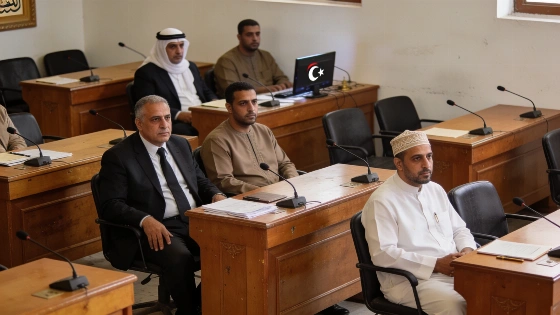
On Tuesday, October 20, Libya's eastern-based House of Representatives unanimously approved the agreement with Türkiye's then internationally recognised Government of National Accord in Tripoli, House spokesperson Abdullah Bliheg said. The chamber also repealed Decision No. 1 of 2020, which rejected ratification of the Turkish-Libyan memorandums, and Decision No. 6 of 2020, which severed political relations with Türkiye, according to the Libyan News Agency.
A reversal in Libya's eastern parliament
The vote reverses the parliament's previous opposition to the maritime deal. The eastern-based chamber is aligned with military commander Khalifa Haftar and had for years refused to endorse an agreement originally signed by the government in Tripoli. The agreement figures prominently in Ankara's regional maritime policy and its relationship with Libya, where political divisions have shaped foreign policy for years.
Libya's divided political landscape also shapes the deal's regional context. The maritime dispute involves competing claims to sea borders and energy exploration rights in the eastern Mediterranean, where offshore zones have drawn attention amid discoveries of large natural gas reserves. The agreement also falls within wider disagreements over maritime rights involving Egypt, Greece and Cyprus.
Those divisions also shape other policy discussions, including the water-treatment talks involving Libya, though those discussions concerned desalination and wastewater rather than maritime boundaries.
Libyan lawmaker Aisha al-Tabalqi said the agreement was approved after specialist committees gave the parliament a detailed account of its provisions. Two lawmakers told Reuters it could bring strategic benefits in economic, political and national-security fields.
Erdogan welcomes the vote
President Recep Tayyip Erdogan welcomed the approval at a Wednesday meeting of his Justice and Development (AK) Party parliamentary group in Ankara. "I hope this important decision will be beneficial," he said.
Türkiye welcomed the parliament's vote, saying the memorandum respected the mutual rights and interests of both countries under international law and principles of equity. Greece rejected the deal, saying it contravened international law of the sea and infringed on the sovereign rights of states in the region. On October 21, Egypt also rejected the move, saying the memorandum was null and void and had no legal effect for Cairo.
Erdogan also said a separate joint defence agreement had been submitted to Türkiye's parliament for ratification. "We have submitted the joint defence agreement we signed with Pakistan and Saudi Arabia to our parliament for ratification," he said.