The House of Representatives says it will not replace commodity fuel subsidies until studies are complete and safeguards are in place, as public distrust centres on whether the state can deliver cash support.
Late salary payments and problems accessing medicines have fed public doubts about whether Libya's state can deliver a new form of support. Problems getting fuel or cash deepen the concern: would cash subsidies reach people reliably?
The House of Representatives says a shift from commodity-based fuel subsidies to cash payments is one option under study to address economic imbalances. It stressed that considering the proposal does not mean subsidies will be abolished or replaced immediately.
At a consultative meeting in Benghazi on 4 November 2026, House Speaker Al-Salihin Abdel-Nabi called for a comprehensive national plan for economic and financial reform and a detailed study of fuel consumption and subsidy costs. He asked for proposals on compensation if subsidies were eventually lifted, including additions to monthly salaries or a dedicated card system. He also asked officials to consider another suitable mechanism. The Libyan News Agency reported that Abdel-Nabi called for a study on regulating subsidies and ensuring benefits reach eligible citizens.
Safeguards are a condition for change
The House says any decision to replace or further reform the system will come only after the necessary studies are complete and essential requirements are in place. It says those safeguards should protect citizens' rights and ensure fair access. They should also protect living standards and economic stability. The House has described cash assistance as an option under review, not an approved replacement for existing fuel subsidies.
The statement gives no date for a decision. It leaves the proposal at the study stage.
The economic backdrop includes a 14.7% devaluation of the dinar in January 2026 and annual consumer-price inflation of 16.6% in September, up from 14.3% in August, figures reported by Libya Observer. The World Bank estimated that the parallel-market exchange-rate premium averaged 42% in the first half of 2026. Libya's dependence on imported goods means currency movements can affect domestic prices. Reported inflation and exchange-rate figures frame the purchasing-power conditions facing any cash-transfer proposal.
Public concern centres on delivery
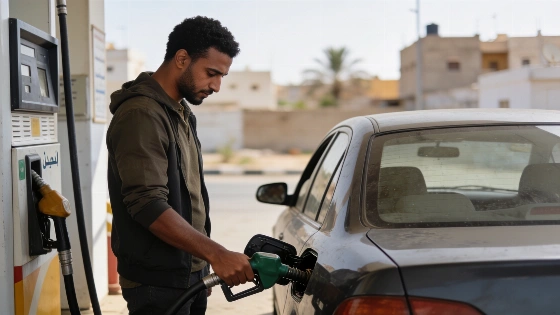
The account describes distrust rooted in economic mismanagement by Libya's ruling elite and allegations that members of the elite have used the state for personal gain. It cites late salaries and medicine shortages, as well as gaps in healthcare and education. It also says access to cash at banks and the availability of petrol or diesel are among the services that have failed.
Questions about whether official rules translate into delivery have also featured in Tunisia, where a procurement-law review was discussed amid concerns about project delays and defects. In Libya, the House says no subsidy change will be made before studies are complete and safeguards are in place.
The subsidy debate is also tied to the financing of imported fuel. Libya's National Oil Corporation reported that October oil receipts were linked to fuel-import credits arranged through the Libyan Foreign Bank under Cabinet Resolution No. 525 of 2026. Remaining funds were transferred to the Central Bank after fuel bills were covered. The Rio Times reported that between 1 and 15 October the Audit Bureau recorded gross oil receipts of about $1.448 billion. Approximately $865 million was reserved for fuel imports, while $577 million was transferred to the Central Bank.
In a separate account of the same period, the National Oil Corporation said approximately $1.23 billion in gross oil receipts had been paid into its Libyan Foreign Bank account by 13 October before fuel-import deductions. The Central Bank reportedly said it had received about $361 million over that period. Oil revenues account for roughly 90% of state income, while an IMF assessment cited by IntelliNews put the 2025 fiscal deficit at about 30% of GDP and public debt at 146% of GDP.
Libya Observer has also described the fuel-subsidy issue as connected to fuel distribution and alleged smuggling of imported refined products. The analysis identified corruption and weak oversight as challenges in assessing how subsidy costs and fuel-distribution controls interact.