
Workshops in Tripoli have produced a roadmap to link risk data, hazard monitoring, public alerts and emergency response across Libya. Recent deadly floods and nationwide weather alerts show the challenge of turning that plan into coordinated action by 2027.
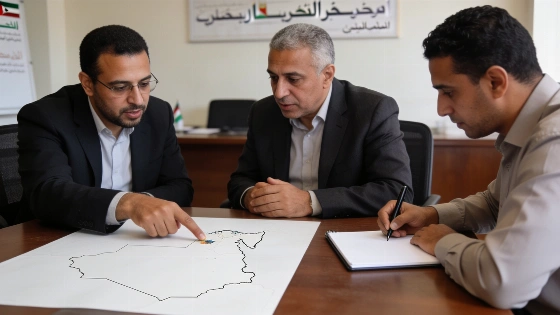
On 29 and 30 September, national workshops in Tripoli brought officials together to map out a framework for early warnings in Libya. The roadmap was unveiled on the second day.
The stated goal is protection for everyone through early warning systems by 2027. The target is clear. It does not mean an integrated system is already operating.
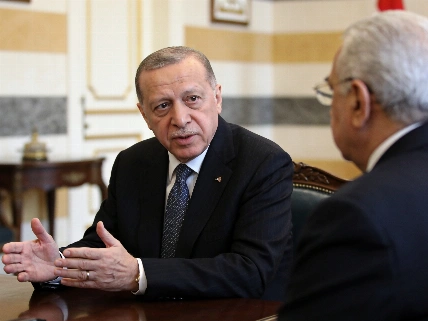
The National Centre for Emergency, Crisis, and Disaster Management is Libya's focal point for UN Secretary-General António Guterres' Early Warnings for All initiative. It convened the workshops with UNDRR, IFRC, WMO and ITU. The event was titled From Risk Knowledge to a National Early Warning Roadmap. On the first day, participants focused on the initiative's first pillar: understanding disaster risks.
They reviewed the state of risk information in Libya, validated priority data and identified capacity gaps and national needs. Representatives came from water resources, communications, meteorology, remote sensing, climate research and the Libyan Red Crescent Society.
The initiative's other pillars cover hazard detection and forecasting, public warnings, and preparedness and response at national, local and community levels. Its design calls for existing capacity and investment to work together in a multi-hazard system. Vulnerable groups are a priority. That is the test.
Recent floods show why forecasting must connect with public communication and response. On 24 and 25 September 2026, the National Centre of Meteorology warned of unstable weather, heavy rain, possible flash floods and rising water in low-lying areas across parts of western, central and southern Libya. Reports named risk areas including Mizda, Bani Walid, Tarhuna, Ghadames, Wadi al-Shati, Jufra and Sirte. They urged people not to cross wadis during rainfall.
The alerts came during a wider spell of adverse weather reported from about 18 to 26 September. Xinhua reported three deaths in Libya linked to flooding on 24 September. A LANA-published advisory from the Ministry of Water Resources urged caution and told residents to avoid wadis and areas where water collects. It linked the danger to forecasts by the National Centre of Meteorology. Warnings must arrive on time, make sense to the public and guide decisions by local authorities and emergency services.
On the second day, the workshops drew a wider group of public bodies. Attendees included ministries responsible for defence, interior, social affairs, water resources, environment, planning, foreign affairs and youth. National technical agencies, emergency services, the Libyan Red Crescent, WHO, GIZ and WFP also took part.
The Centre says the workshops aim to bring efforts together and improve coordination and information-sharing. The framework also calls for people outside government to take part, including local authorities, civil society, businesses, universities, media and communities exposed to risk. It says age, disability and gender should be considered when assessing vulnerability.
The Centre's multi-hazard work covers more than sector-specific disruptions such as the temporary field shutdown described in an earlier oil report. This roadmap seeks to coordinate warnings and responses across different risks. Flooding in Libya can affect communities far from the coast, along with infrastructure and transport routes. Local preparedness must be connected to weather information.
The initiative follows renewed scrutiny of preparedness and coordination between agencies after the 2023 Derna disaster. The National Centre of Meteorology remains the main provider of weather warnings. September's alerts and the Ministry of Water Resources' public safety guidance, reported by state news agency LANA, show how several institutions must carry forecasts through to public action. Xinhua's account of flood deaths shows the stakes when exposure and response capacity are not adequately managed.
Libya has set out a national framework and brought a broad group of institutions into the process. The measure of success will be whether that coordination leads to shared risk information, warnings that reach exposed communities and stronger response capacity before the 2027 target. The roadmap is a starting point, not proof that protection has already been delivered.