A fully autonomous geosteering run at Al-Khair offers a concrete example of Libya's digital oilfield push. The NOC is pairing that capability with new connectivity and local technology development as it targets output of two million bpd.
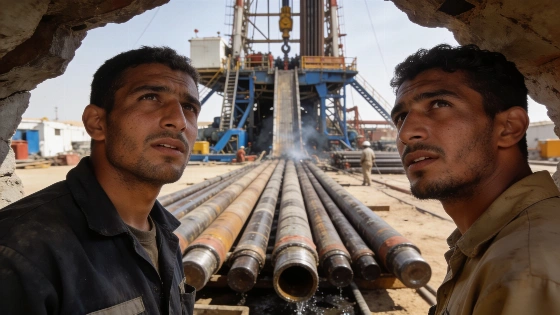
At Al-Khair field in March, Sirte Oil Company completed Libya's first fully autonomous AI-powered geosteering operation. Using SLB technology, the system guided an approximately 1,800-foot horizontal section within the reservoir.
The operation doubled the drilling penetration rate and produced 1,060 bpd. It gives Libya a field-level example of digital tools moving into core production work.
AI moves into drilling operations
The National Oil Corporation (NOC) is working to raise crude production toward two million barrels per day (bpd). Its digital oilfield strategy combines AI-driven automation with stronger communications infrastructure as exploration and redevelopment add complexity across the sector.
The wider oil and gas industry is moving toward remote monitoring and automated operations. Red Chalk's 2026 digital-oilfield review describes national oil companies as major buyers of digital-field technologies and notes that ADNOC deployed an AI-enabled, SLB-built real-time operations centre across more than 120 onshore and offshore rigs. The review says the system can reduce engineering workload by 30% to 40% and let specialists oversee two to three times as many rigs. It also reports that the system can help prevent up to two days of downtime.
Libya's Ministry of Oil and Gas launched its New Energy Tech initiative in 2026 to connect operational problems with domestic technical expertise. Energy companies identify challenges; participants develop prototypes, and solutions that succeed can be linked to companies for practical deployment. The programme targets greater efficiency and better decision-making while lowering operating costs and emissions.
University students and academics are taking part alongside experienced engineers, software developers and AI specialists. That mix is intended to build a pipeline between Libya's technology community and its energy industry. NOC has also completed 12 training programmes in Tripoli and Benghazi, as well as Marsa el-Brega and at the Ajkhara field. The programmes cover engineering, management and digital technologies, Libya Review reported.
On October 11 and 12, 2026, NOC's General Department of the Oil Industry held meetings with Sirte Oil Company and Ras Lanuf Oil and Gas Processing Company, according to the corporation's October news page.
Connectivity extends beyond the well
Remote operations depend on reliable data links. Automated systems can send production and equipment data from distant wells to centralized facilities, where operators can review performance without relying solely on physical visits.
In December 2025, Aljeel Aljadeed Technology and Hatif Libya launched an Oil Fields Connectivity Project covering more than 200 vital sites, including over 80 oilfields and ports. It offers speeds of up to 100 GB per second, expandable to 400 GB per second, using 5G-ready technology.
The network follows the NOC's September 2024 "Toward Smart Oil Cities" agreements with Al-Madar, Libyana and Hatif Libya. Those agreements set out a role for telecommunications in modernizing oil-producing areas and supporting real-time data analysis.
Technology joins the investment agenda
Libya's technology push is unfolding alongside disputes over the country's political roadmap, covered in Maghreb Insider's election roadmap report. For the oil sector, the immediate focus is operational: connecting dispersed assets and developing tools suited to local conditions.
Alongside digital operations, NOC and Eni are advancing associated-gas infrastructure. On October 19, 2026, Eni announced completion of the Bouri Gas Utilization Project, carried out with NOC through the Mellitah Oil & Gas joint venture, and said start-up procedures were under way. The project is designed to recover associated gas from the offshore Bouri field and support emissions reduction. Eni reported its 2025 share of hydrocarbon production in Libya at approximately 162,000 barrels of oil equivalent per day. Details of the project were set out in Eni's announcement.
The Libya Energy & Economic Summit (LEES) 2027 will bring this agenda into broader discussions of investment and production expansion. The summit is scheduled to take place in Tripoli from January 23 to 25.