
Mauritania's Ministry of Agriculture is preparing a joint project with Italy to develop up to 20,000 hectares in Brakna, aiming to boost wheat and vegetable production and strengthen food security through new irrigation infrastructure.
Mauritania's Minister of Agriculture and Food Sovereignty, Mouhamedou Ahmedou Mhaimid, met with an Italian delegation to discuss the advancement of a joint agricultural initiative under the "MATI" programme, part of broader Italo-African cooperation. The project is currently in the preparatory phase and involves collaboration between the Société nationale de développement rural (SONADER) and the Italian company B.F.I.
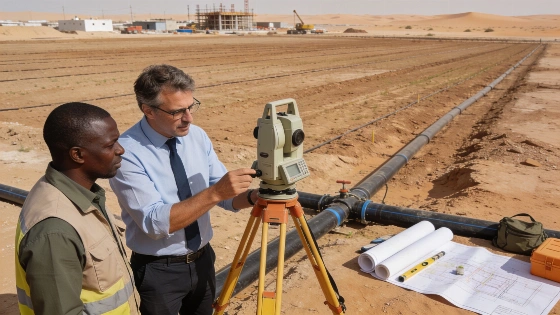
The initiative aims to develop between 10,000 and 20,000 hectares of land in the Brakna region, with a focus on constructing a new irrigation canal near the town of Boghé. According to the Ministry, this infrastructure is intended to support the integration of wheat cultivation into Mauritania's agricultural system, expand vegetable production, and improve the quality and availability of rice and wheat seeds.
Italian support for the project is expected to enhance Mauritania's food security and agricultural resilience, aligning with national priorities to diversify crop production and reduce reliance on imports. The project also reflects a growing trend of international partnerships in Mauritania's development strategy, as seen in other recent initiatives such as the country's efforts to expand economic cooperation with India, highlighted in a recent meeting between Mauritanian and Indian officials.
Strategic Goals and Regional Impact
The Brakna project is designed to address both immediate and long-term challenges in Mauritania's agricultural sector. By introducing wheat into local farming systems and improving irrigation, the government aims to strengthen food self-sufficiency and create new opportunities for rural communities. The involvement of Italian expertise and financing is expected to accelerate technology transfer and capacity building within SONADER and local partners.
What to Watch Next
Key milestones to monitor include the finalisation of technical studies, the launch of construction on the new canal, and the formalisation of partnership agreements between Mauritanian and Italian stakeholders. The project's progress will be a test case for Mauritania's broader strategy of leveraging international cooperation to modernise its agricultural sector and enhance food security.