Mauritania's government is moving to launch the Al-Rakba agricultural project in Brakna, aiming to create 10,000 jobs for youth and women across five wilayas. The initiative is backed by over 6 billion MRO in joint funding with the Islamic Development Bank.
More than 6 billion MRO in public and multilateral funding is now being mobilised to transform Mauritania's agricultural sector, as the government accelerates the launch of the Al-Rakba project in Brakna and pushes forward with its headline promise: 10,000 new jobs for young people and women in just two years.
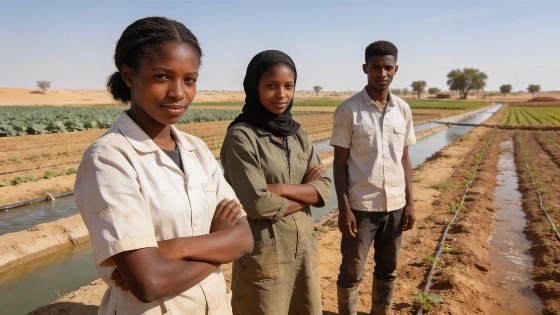
The Ministry of Agriculture and of Food Sovereignty, under Ahmedou Ould Mouhamedou Ould Mhaimid, has placed the Al-Rakba project at the centre of its employment strategy. The project, located in Dar al-Baraka in Brakna, will cover 1,575 hectares divided into three sections, with irrigation canals stretching 25 kilometres from the Senegal River. This is not a pilot-this is a flagship intervention, designed to anchor the first phase of a national employment drive targeting 56 communes across Hodh Chargui, Hodh El Gharbi, Assaba, Adrar, and Tagant.
High-Stakes Investment and Social Targeting
Half of the 10,000 direct jobs are reserved for women, and priority is given to youth aged 18 to 35-a demographic that has too often been left out of Mauritania's formal economy. The government's approach is explicit: use large-scale agricultural development as a lever for social inclusion and rural transformation. The Islamic Development Bank is co-financing the project, signalling international buy-in for Mauritania's rural employment agenda.
Officials are keen to avoid the pitfalls of previous schemes. During the latest review meeting, the Ministry scrutinised the outcomes of youth employment pilots in R'Kiz and Bakh Jik (Trarza), seeking evidence of what works and what fails. This mirrors the kind of targeted sectoral investment seen in Algeria's public transport overhaul, as reported earlier.
Implementation Risks and Regional Stakes
The Al-Rakba project's success will hinge on more than just capital and land. Execution capacity, irrigation reliability, and the ability to match job creation targets with real market demand remain open questions. The government's decision to concentrate resources in Brakna and the five wilayas is a calculated bet: if the model delivers, it could become a template for rural employment policy across the Sahel. If it falters, the credibility of Mauritania's employment promises will take a direct hit.
What is clear is that the stakes are not limited to local job numbers. The project's outcome will shape perceptions of Mauritania's state capacity, its ability to deliver on gender and youth inclusion, and its attractiveness to international partners seeking scalable models for rural transformation. The government's willingness to tie its reputation to hard employment targets-backed by substantial external financing-marks a shift from rhetoric to measurable delivery. Whether this gamble pays off will be determined not by announcements, but by the number of young Mauritanians and women who find real, sustainable work in the fields of Brakna and beyond.