

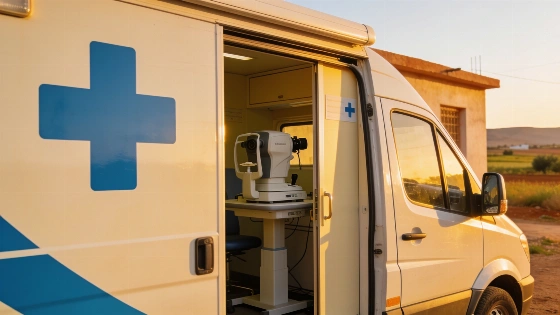
The clinics will bring eye checks and treatment to rural communities, with cataract surgery available for patients who need it. Around 15,000 people are expected to be served in the first six months.
Long distances and limited healthcare access can keep rural residents in Morocco and Mozambique from getting timely eye checks.
On 20 November 2026, the Mohamed bin Zayed Foundation for Humanity announced the first phase of a mobile eye-care programme in both countries. The clinics are expected to serve approximately 15,000 people during their first six months, providing screening and diagnosis, followed by treatment and support for cataract surgery. The foundation's announcement of the programme says the model will work with national health services and may later extend to other African countries.
Care closer to rural communities
Working with the health ministries of Morocco and Mozambique, the foundation will deploy mobile clinics to screen patients and diagnose eye conditions. The programme will provide treatment, while patients requiring more specialised care will be referred to government health facilities.
In Morocco, the programme is connected to the Oriental Region, with a mobile surgical unit planned for cataract procedures. The Moroccan Ministry of Health and Social Protection had listed Oujda as the expected venue for a Morocco-focused clinic launch on 17 November. Its activity notice describes the service as bringing eye-disease screening and vision care closer to people in remote areas. The foundation announced the broader two-country phase on 20 November.
A Moroccan report by Ahdath put the expected number of beneficiaries in Morocco alone at more than 7,000 during the first six months. The foundation's approximately 15,000 figure covers Morocco and Mozambique together.
The launches were attended by senior officials. In Morocco, participants included Mhamed Atfaoui, Wali of the Oriental Region and Governor of Oujda-Angad Prefecture, and Dr Ahmed Oudich, Regional Director of Health and Social Protection for the Oriental Region.
Mozambique's First Lady Gueta Chapo and Health Minister Ussene Isse attended the launch there. Mansour Mohamed Ali Aljuwaied, the UAE Ambassador to Mozambique, was also present.
Sheikh Shakhboot bin Nahyan Al Nahyan, UAE Minister of State, said the initiative reflected the UAE's commitment to improving access to healthcare. He said the clinics would bring care to rural communities and help thousands lead healthier, more productive lives.
Preventable vision loss and national health plans
At least 2.2 billion people worldwide live with vision impairment. At least one billion have vision loss that could have been prevented or treated but lack access to basic eye care. Poor eyesight can make learning harder for children and limit adults' ability to work or remain independent.
The foundation says each dollar invested in eye health can generate up to $28 in economic returns. A separate report on Algeria's diabetes burden examined another public-health challenge in the region.
Both governments are working to improve access to care beyond major cities. Morocco's Health Minister Youns Bjijou said the partnership would help rural residents receive timely checks and treatment, supporting wider efforts to strengthen the health system in line with the vision of King Mohammed VI.
Mozambique's Health Minister Ussene Isse said the priority was to reduce long journeys and unnecessary waits for eye examinations and treatment. Dr Shamma Khalifa Al Mazrouei, Director General of the Mohamed bin Zayed Foundation for Humanity, said the programme would work with local health workers to identify common conditions and provide glasses, with surgery arranged where needed.
The two countries will use different pathways for cataract operations. In Morocco, procedures are planned with support from a mobile surgical unit. In Mozambique, the foundation will partner with local health facilities to operate on patients identified during mobile clinic screenings. The clinics are intended to complement existing national health services, with complex cases referred to government-run facilities.







