

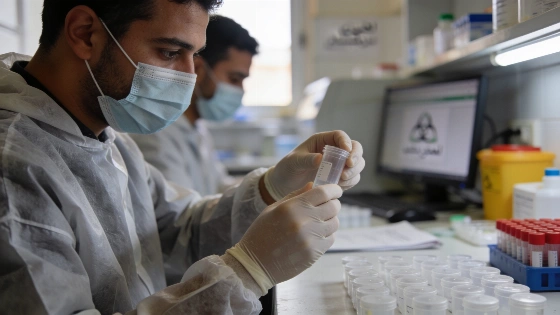
Morocco's ONSSA is working with international partners on a BSL-3 design for its Casablanca laboratory. The project began in September 2026 and is expected to conclude in January 2027.
In Casablanca, specialists have been tracing how samples move through ONSSA's regional laboratory, from arrival to waste disposal. The review is informing plans to adapt part of the existing Casablanca Regional Laboratory for Analysis and Research for high-containment diagnostic work.
The project began in September 2026 and is expected to conclude in January 2027 with a validated design package tailored to local needs and operating conditions, while taking future diagnostic requirements into account. The Pirbright Institute announced the collaboration on 29 October 2026, describing its aim as establishing Biosafety Level 3 (BSL-3) diagnostic capability to support Morocco's long-term animal-health surveillance and disease response.
Laboratory users inform the design
Morocco's National Office for Food Safety (ONSSA), which operates the Casablanca laboratory, is working with The Pirbright Institute, BioPREVAIL and the World Organisation for Animal Health (WOAH). BioPREVAIL is leading the project as an initiative hosted by the Global Health Security Fund in Geneva, with support from Global Affairs Canada's Weapons Threat Reduction Program.
The team is using BioPREVAIL's Participatory Laboratory Design Methodology, which puts laboratory users at the centre of facility planning. It draws on day-to-day operations to set practical requirements for architects and engineers, including existing workflows and infrastructure constraints.
Pirbright specialists and WOAH experts are part of the Technical Experts Group. During the diagnostic phase, they worked with ONSSA colleagues to observe laboratory activities and identify operational challenges. The assessment maps the process from sample arrival through laboratory work and waste disposal. Its findings will inform design recommendations for architects and engineers.
Preparedness and operating needs
The proposed BSL-3 capability is intended to strengthen Morocco's animal-health surveillance and outbreak-response capacity, with wider relevance to preparedness in North Africa. Laboratories can help detect diseases affecting animals and food systems, as well as human health. The project's stated aim is to ensure the planned facility is resilient and sustainable while meeting local operating conditions and future diagnostic needs.
Dr Carrie Batten, Head of the Non-Vesicular Reference Laboratory at Pirbright, said international partnerships can strengthen diagnostic capacity and preparedness for animal-disease outbreaks. Such outbreaks can affect food security and livelihoods, with consequences for global health in North Africa and Europe.
The laboratory project is separate from Morocco's cooperation in other fields, including a US-Morocco training partnership focused on defence-related technical training. The Casablanca initiative concerns the design and assessment of an existing facility; its validated design package is expected in January 2027. The Pirbright Institute's project announcement describes the work as a planning phase for BSL-3 diagnostic capability.







