

The draft assigns 25 billion dirhams to integrated territorial programmes and puts social protection high on the agenda. Officials forecast 4.7% growth in 2026, with a budget deficit of 3% of GDP.
Morocco's government has set out five priorities for the draft 2027 budget, including purchasing power, the social state, youth employment, territorial development, strategic sovereignty and a stronger economy with greater investment capacity. It projects economic growth of 4.7% in 2026, inflation of 0.7% and a budget deficit equal to 3% of GDP. Agencia EFE reported the figures as part of preparations for the 2027 budget; they are forecasts, not final results for the year.
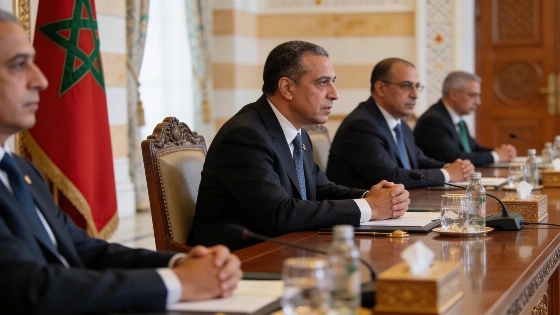
King Mohammed VI chaired a Council of Ministers meeting at the Royal Palace in Rabat on Saturday, October 17. Crown Prince Moulay El Hassan was present. The meeting approved the broad guidelines for the draft Finance Law for 2027.
The first priority is purchasing power and the social state. The second combines education and vocational training with a focus on youth employment. Territorial development is another priority. The plan also puts strategic sovereignty on the agenda. Its fifth priority is strengthening the economy and investment capacity.
Social protection and youth employment take priority
The first priority pairs measures to support purchasing power with efforts to strengthen the foundations of the social state. The draft calls for structural reform of markets and prices, and proposes expanding sustainable health coverage.
Direct social assistance would increase, while public healthcare and education would improve. The plan would also continue direct housing support. Le Matin's report outlined the social measures.
A national programme running from 2027 to 2031 is designed to connect young people's education and vocational training with pathways into decent work. It links training to business incubation, followed by access to financing. The support chain also covers guarantees and markets, with housing included. Hespress English described the programme.
Separately, Maghreb Insider reviewed records related to property in Tangier. Its report on Tangier property found that the cited records did not establish a link to Spanish policy.
Regional development receives 25 billion dirhams
The draft earmarks 25 billion dirhams for a new generation of integrated territorial development programmes. Information from Morocco World News, the money is not assigned to a single named infrastructure project.
The plan also proposes clarifying regional responsibilities. It calls for stronger coordination between the state and regions, alongside implementation of the national charter on administrative decentralisation.
Sovereignty and investment shape the wider plan
The strategic sovereignty agenda covers water security and renewable energy. It also includes Morocco's green hydrogen offer and the gradual rollout of gas infrastructure. Food security and digital sovereignty are part of the plan too.
On the economic side, the draft backs major development projects and new industrial ecosystems. It also calls for institutional reforms. The Investment Charter and further reform of regional investment centres are intended to encourage private investment.
The draft gives particular support to micro and small businesses. Medium-sized businesses are included too.
The measures approved on October 17 set out the general guidelines for the draft Finance Law, not the final budget law. The proposals and the government's economic projections are part of preparations for the 2027 financial year.







