

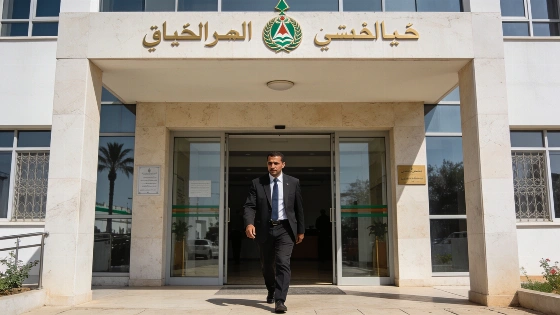
Morocco's new ministry carries a 2030 plan targeting 100 billion dirhams in added value and 50,000 jobs. Meeting those goals will require sustained research and reliable digital infrastructure.
Morocco presented its Morocco AI 2030 roadmap in September 2026, putting digital sovereignty among its priorities. The new ministry now faces a test measured in economic outcomes and skills development, building on the wider Morocco Digital 2030 strategy launched in September 2024.
The AI roadmap aims to generate 100 billion dirhams in added economic value by 2030, approximately $10 billion. It also targets 50,000 direct and indirect jobs, plus training or certification for 200,000 people. The reported roadmap targets set benchmarks for economic activity and employment, with skills as a separate measure.
Targets need institutional backing
Morocco appointed Ahmed Rahhou as minister of artificial intelligence, digital transformation and administrative reform on October 16, 2026, in the government led by Prime Minister Fatima Ezzahra El Mansouri. The portfolio combines AI policy with public-service modernization and administrative reform.
A decree published in the Bulletin officiel on October 26, No. 2-26-831, assigned Rahhou responsibility for developing government AI policy and overseeing its implementation with relevant sectors and institutions. It also placed the Digital Development Agency under his ministerial supervision. As Medias24 reported, the decree describes his remit as developing government policy in artificial intelligence and ensuring its implementation with the sectors and organizations concerned.
The ministry's work sits within Morocco Digital 2030. The strategy includes digitizing administrative services and extending 5G coverage to 70% of national territory by 2030. It also provides for 100,000 annual training places in digital professions. These commitments put connectivity and a continuing pipeline of technical skills alongside AI-specific goals.
Delivering the roadmap will require sustained funding and reliable electricity, as well as connectivity. Computing capacity will matter too, along with usable data and technical education. Researchers need support to work over time, while businesses need room to develop and maintain products. A planned infrastructure project adds a concrete dimension to the ambition: an agreement signed with Nexus on April 8, 2026, covers an AI Factory in Nouaceur valued at $1.2 billion. Morocco has also set a national objective of reaching 1 gigawatt of data-center capacity by 2030.
The ministry's reported proposed allocation for 2027 is nearly 1.34 billion dirhams. Priorities span training and public services, with infrastructure and exports of digital services also included. That program gives the portfolio a budgetary and administrative dimension as it moves from roadmap targets toward implementation.
A central ministry could coordinate agencies and universities, while bringing businesses into the process to avoid overlapping plans or unmet needs. Its practical influence will depend on whether it can shape education policy and infrastructure spending. Public procurement will also be a test. Progress can be tracked against the roadmap's stated targets for value added and jobs, as well as the number of people trained or certified.
Local uses and measurable results
Morocco's priorities include areas where AI could address practical needs, particularly water scarcity and agricultural productivity. Forecasting tools could support responses to drought and extreme weather. Carefully designed systems could also assist healthcare providers or public administrators.
Language is another area for locally tailored tools. On September 29, 2026, Morocco's digital-transition ministry and French AI company Mistral AI announced tools for identifying Moroccan Arabic dialects and transcribing everyday speech. The release included a language-identification model and a speech-recognition system based on Mistral's Voxtral technology, designed to handle speech switching among Darija and Arabic, as well as French and English. Developers, researchers and businesses could access the tools as open-source technologies.
Systems serving Moroccan Arabic and Amazigh speakers could make public services more accessible and reduce reliance on products designed principally for other markets. Building and assessing such tools requires domestic expertise, including the capacity to evaluate imported systems and protect sensitive data.
The ministry's development agenda also connects with Morocco's earlier emphasis on practical cooperation. At the Russia-Africa Summit, Fatima Ezzahra El Mansouri urged both sides to turn action plans into projects. That appeal is covered in Morocco's earlier call for results.
Any expansion of AI in public administration carries responsibilities. Systems can magnify discrimination or enable intrusive surveillance. Citizens without digital access or literacy risk exclusion. Transparency and accountability will matter, as will data protection, alongside technical performance.
Training figures will need to translate into qualified jobs and opportunities for original research. The roadmap's target is to train or certify 200,000 people by 2030. It also aims for 50,000 direct and indirect jobs, alongside 100 billion dirhams in added value.







