

Four JAZARI institutes have legal form, yet records reviewed by 17 October disclose no institute-level budgets or scheduled pilots. Morocco's 2030 AI goals still lack a public baseline for measuring delivery.
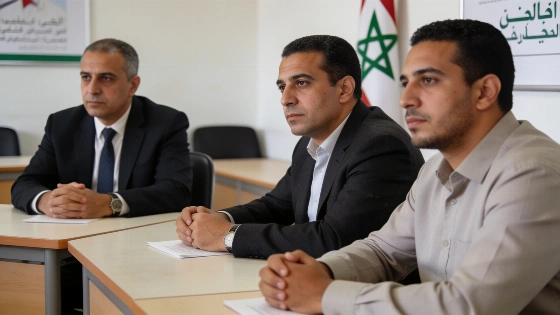
In August, the Official Bulletin published decisions approving four JAZARI founding agreements. The institutes' assemblies followed in Rabat on 8 September, chaired by Digital Transition Minister Amal El Fallah Seghrouchni. The entities are JAZARI ROOT, JAZARI Industrie X.0, JAZARI Education Tech and JAZARI Smart Cities.
That legal step gives the network formal standing. It does not show that labs are operating or that funded pilots and public services are in use. The distinction matters as the government moves "AI Made in Morocco" from roadmap to implementation.
Mandates are in place; delivery evidence is scarce
Morocco announced JAZARI ROOT on 12 January 2026 as the network's coordinating centre. Officials presented it as part of the national "AI Made in Morocco" roadmap. The network is intended to connect universities with research laboratories, companies, startups and public institutions. It is expected to have a presence across all 12 regions, linking research with applied work in education and industry. Urban management is another stated focus.
ROOT has 17 founding members. They include public bodies, the General Confederation of Moroccan Enterprises (CGEM), the General Directorate of National Security (DGSN) and the National Commission for the Control of Personal Data Protection (CNDP). The public-interest grouping is intended to coordinate the network. Its priorities include tools for public administration and technology for rural and mountainous areas. It also plans applications for major sporting events scheduled for 2030.
The other institutes have defined mandates. Education Tech is tasked with developing and testing data-based teaching tools, including intelligent assessment and augmented- or virtual-reality technologies. Industrie X.0 is to connect research with manufacturers working on AI and robotics. Its remit also covers connected devices, data and cybersecurity. Smart Cities is meant to explore data-led urban services, including mobility and energy. Infrastructure and planning are also in scope.
Those are mandates, not results. Notices and reporting reviewed by 17 October disclose no institute-level budget or staff total. They also provide no pilot calendar or list of deployed systems. Next steps include approving action programmes, assembling teams and launching projects.
Construction plans do not prove the network is operating
Le Desk reported that the orders created four public-interest groupings. JAZARI ROOT has 17 founding members, including the General Directorate of National Security and the CNDP. The network is intended to reach all 12 regions.
Le Matin reported that eight more institutes remain to be established. The outlet said the network still needed research projects and startup links to become active, as well as calls for proposals. A 2026 citizen-budget guide separately lists the launch of construction work for a JAZARI Institute in Guelmim-Oued Noun, but gives no cost or completion date. A planned construction action does not establish that the facility has been built.
The gap between a programme basic stage and completed delivery also appears in Maghreb Insider's solar procurement coverage. It reports a tender timetable, not completed capacity.
The next evidence should be concrete: named teams and institute budgets, followed by dated pilot calls. Those calls should identify a partner school or factory. They could also name an administration or municipality. Public evaluations would need to report accuracy, user numbers and service outcomes.
Other AI products are not JAZARI institute results
The ministry has also announced a sovereign AI marketplace and Idarati AI, an assistant intended to guide users through administrative procedures. These are separate public-service initiatives. Materials reviewed by 17 October do not establish routine use of the assistant or measured service outcomes.
A separate ministry partnership with Mistral AI has produced public model pages for LIDstral Arabic, a language and dialect classifier, and Voxtral Mini 4B Realtime Arabic, a streaming speech-to-text model. Both are downloadable under Apache 2.0. Voxtral's model card reports developer-run benchmarks using a normalisation protocol co-developed with the ministry. The card also says no inference provider has deployed the model. The records do not attribute either model to a JAZARI institute or identify a JAZARI-led pilot.
Data rights and targets remain part of the test
CNDP and the ministry agreed in September 2025 to develop a responsible-AI structure and a national platform based on a large language model. The agreement records work underway. It does not provide a published account of how each service handles personal information.
In a 16 September legal analysis, Dr Meryem Aanaiber argued that Morocco's 2009 data law lacks detail on AI training data and downstream reuse. That is an expert critique, not an official finding. It puts data rights alongside the accuracy of AI services. Users' ability to challenge wrong answers is another question for the rollout.
Morocco's 2030 plan targets MAD 100 billion in added value. It also aims for 50,000 direct and indirect jobs. The plan calls for training and certifying 200,000 people. These are national roadmap targets, not results attributed to JAZARI. The programme includes a national software platform and a Data Factory. It also covers sovereign data-centre projects and work on a regulatory structure. In comments reported by Le Matin, Minister Amal El Fallah Seghrouchni said: "AI Made in Morocco is a way of saying that we want to be among those who design, and not only among those who use. And that we have decided not to wait".
At XE's 16 October 2026 mid-market rate, MAD 100 billion is about KES 1.33 trillion. The conversion is approximate. The GDP figure is a target, not a budget or achieved output.
Le Matin reported 47,153 training beneficiaries against a 100,000-talent benchmark. That benchmark differs from the ministry's 200,000 AI-talent target, so the public figures do not yet provide a clear measure of progress.
As of 17 October, the disclosed record still lacks institute budgets, staffing figures and a dated pilot schedule.







