
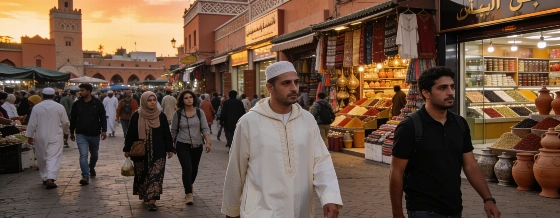
Morocco has become Africa's top tourist destination in 2024, attracting 17.4 million visitors. Strategic investment in transport and hospitality, combined with the country's unique blend of tradition and modernity, is reshaping the regional tourism landscape.
Morocco drew 17.4 million visitors in 2024, the highest number on record and enough to make it Africa's top tourist destination. The Moroccan Ministry of Tourism and the national news agency MAP both report that this growth is the result of a long-term national strategy aimed at attracting international travelers who want both authentic experiences and modern comforts.
The pace of change has been striking. In the first quarter of 2025, Morocco welcomed 4 million visitors, up 22 percent from the same period last year, according to the Ministry of Tourism. This growth follows years of investment in airports, roads, and high-speed rail. The Al Boraq line, for example, now connects Casablanca, Rabat, and Tangier in under two hours-a project highlighted by the African Union and covered by MAP.
Infrastructure and experience
Morocco's tourism boom is built on more than just visitor numbers. The country has upgraded its infrastructure, making it possible to travel easily from the old medinas of Fez to the Atlantic coast at Essaouira, or from Marrakech to the Sahara dunes at Merzouga, all in a single day. The hospitality sector has expanded as well, with new hotels and tours for families, solo travelers, and groups. The Moroccan National Tourist Office reports that these improvements helped generate a record MAD 157.7 billion services surplus in 2025, with tourism as a major contributor.
Accessibility is a major draw. Flights from cities like London to Marrakesh take less than four hours, making Morocco an option for both long vacations and short breaks. This proximity, along with a stable investment climate, has made the country popular with European travelers and tour operators. France remains the largest source of visitors, with over 5.7 million French tourists in 2025, according to the Ministry of Foreign Affairs and MAP.
Diverse destinations and experiences
Morocco offers a wide range of experiences within short distances. The Atlas Mountains divide the country, creating a sharp contrast between the green valleys of the north and the Sahara to the south. In the north, Berber villages sit on hillsides; in the south, palm oases and old kasbahs dot the landscape. On the Atlantic coast, cities like Agadir and Essaouira stay cool year-round, unlike the hot desert interior.
Each city has its own character. Marrakech is known for its lively Jemaa el-Fna square and maze-like souks. Fez draws visitors interested in history and traditional crafts, with its car-free medina and the world's oldest continuously operating university. Chefchaouen, with its blue-painted streets, offers a slower pace for those who prefer wandering to bargaining. The Tunis Afrique Presse (TAP) agency notes that Morocco's approach to tourism is now a reference point in Maghreb policy discussions.
Culture, festivals, and daily life
Morocco's cultural calendar is as varied as its geography. The Mawazine festival in Rabat brings international musicians, while the Festival of World Sacred Music in Fez attracts global audiences. These events are part of local life, not just tourist attractions, and often give visitors a reason to come outside the usual high season. The Ministry of Culture works with local authorities to keep these festivals rooted in Morocco's living traditions.
Food is central to daily life. Tagines, couscous, and mint tea are everyday staples, made with ingredients from local markets and often cooked in communal ovens. Cooking classes in Marrakech let tourists learn directly from locals. The United Nations Economic Commission for Africa (UNECA) has pointed to Morocco's culinary tourism as a model for sustainable development in the region.
Regional impact
Morocco's rise as a tourism destination affects the wider region, especially as neighboring countries look to diversify their economies. The government's ongoing investment in infrastructure and hospitality is part of a broader plan for long-term growth in a sector that can be vulnerable to global shocks. Recent political initiatives, including large-scale social reform proposals, show that Morocco's leaders see tourism as part of a national development strategy, not just a standalone industry.
Morocco's tourism growth is the result of deliberate policy and investment, not chance. The country offers both ancient medinas and high-speed trains, desert trips and Atlantic beaches. As other African and Mediterranean countries watch Morocco's progress, the lesson is clear: sustained tourism growth depends on infrastructure, accessibility, and a real effort to welcome visitors. For now, Morocco has set the standard in the region.