
Violent flash floods have struck Morocco's Azilal region with little warning, destroying homes and businesses as outdated infrastructure fails to withstand extreme weather. The crisis exposes the vulnerability of mountain settlements and the urgent need for climate adaptation.
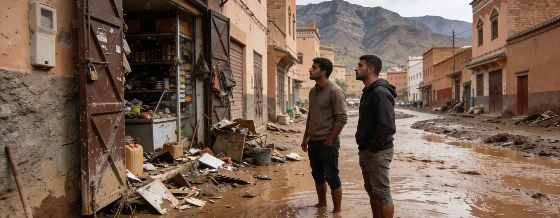
In Azilal, entire neighborhoods disappeared under mud and debris within minutes. Residents watched as brown water rushed through their streets, flooding homes and wiping out businesses before emergency crews could respond. The destruction goes beyond seasonal disruption-it threatens the future of mountain communities in central Morocco. The Moroccan Meteorological Directorate (DGM) issued a severe weather warning for Azilal and nearby provinces on 9 September 2026, predicting thunderstorms, hail, and strong winds that arrived with full force (Morocco World News). The national news agency MAP reported a sudden surge at the Oum Er-Rbia springs near Khénifra, which damaged tourist sites and cut off rural areas.
These flash floods are so destructive not just because of the rain, but because of how quickly disaster strikes. Dry riverbeds, harmless for months, turn deadly as storms dump water in a short burst. Drought-hardened ground can't absorb the rain, so water races down steep slopes, overrunning drainage and flooding valley towns with almost no warning. The DGM recorded 25-35 mm of rain in Azilal and nearby areas over ten hours-enough to trigger flash floods in the High Atlas and Middle Atlas, given the region's terrain and soil (Morocco World News; MAP).
Infrastructure fails as weather patterns shift
Azilal's infrastructure is struggling to keep up with changing weather. Drainage systems built decades ago for milder storms can't handle today's downpours. Roads vanish under mud and rocks, power cuts are common, and blocked routes leave some communities stranded. Shop owners and families lose furniture, electronics, and food in a matter of hours. Cleaning up is exhausting, with thick mud left behind long after the water drains away. The Ministry of Equipment and Water has called for urgent upgrades, and the Moroccan government is working with the African Union's disaster risk management program to speed up adaptation.
This is not just a local problem. Across North Africa, flash floods are becoming more frequent as weather patterns shift. Long dry spells make the soil repel water, so when rain finally comes, the risk of flooding rises. Local authorities are being forced to face the limits of old defenses. The Algerian Press Service (APS) and Tunisia's TAP agency have reported similar problems in their own mountain regions, showing that the challenge stretches across the Maghreb.
Pressure mounts for adaptation and response
Officials now have a clear choice: adapt or face growing losses. Upgrading flood defenses, clearing drainage, and investing in early warning systems are now essential. Land management is also key-reforestation can slow runoff, and retaining walls or diversion channels can help protect crowded areas. But these projects are not keeping pace with climate change, leaving people exposed to the next storm. The Ministry of Interior says it is committed to improving disaster response, but many communities worry that progress is too slow.
For people living in or traveling through Morocco's flood-prone areas, staying alert is now a matter of safety. Even shallow moving water can hide real dangers. The advice is simple: never try to cross flooded roads, and head for higher ground if severe weather is forecast. The Directorate General of Meteorology posts regular updates on its official portal, and travelers are urged to check these warnings.
Morocco is not alone in facing these risks. As reported earlier, critical infrastructure across North Africa is increasingly exposed to sudden shocks, whether from weather or security threats. The lesson is straightforward: outdated systems and slow responses put communities at risk. Until adaptation keeps up with the pace of these disasters, places like Azilal will remain vulnerable, paying the price for every delay.