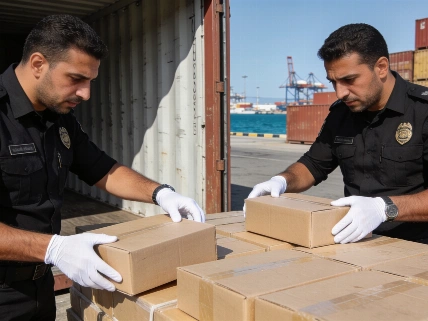
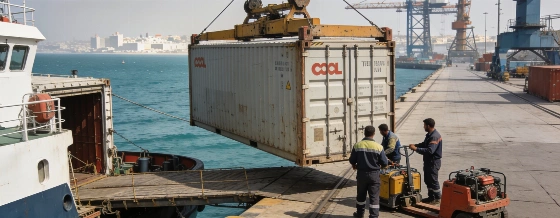
Tunisia's trade deficit reached TND 17.85 billion by August 2026, driven by rising energy and raw material imports that have outstripped export growth. The widening gap is putting new strain on the country's external finances.
Tunisia's trade deficit reached TND 17.85 billion by the end of August 2026, according to the National Institute of Statistics (INS). This is up from TND 14.64 billion a year earlier. The coverage ratio of exports to imports fell to 71.4%, showing increased pressure on the country's external finances. The deficit is now at its highest in recent years, reflecting Tunisia's growing reliance on imported energy and industrial goods.
Data from INS, also reported by Tunis Afrique Presse (TAP), shows that energy products made up more than half the shortfall, with a negative balance of TND 8.93 billion. The non-energy trade deficit was TND 8.92 billion, highlighting the impact of energy costs. Imports of raw materials, semi-finished goods, capital equipment, and consumer products all contributed to the growing deficit. Only food products posted a surplus, at TND 983.1 million.
Export growth falls short
Tunisia's exports rose to TND 44.67 billion. Agri-food industries led the way, up 20.8%, mainly due to olive oil exports, which reached TND 3.77 billion. Mechanical and electrical industries grew by 8.5%, and energy exports increased by 44.3% on higher refined product sales. However, these gains were not enough to offset a 12% drop in mining, phosphates, and derivatives, or a 4.8% decline in textiles, clothing, and leather, according to Business News Tunisia and the Ministry of Trade's monthly bulletins.
Europe remains Tunisia's main export market, taking in 70.2% of exports. Sales to France, Italy, and Germany rose slightly, while exports to Greece and Malta fell. Among Arab countries, exports to Egypt and Saudi Arabia increased, but sales to Morocco, Algeria, and Libya declined, reflecting shifting regional trade patterns tracked by the Arab Maghreb Union and the African Union's Economic Commission for Africa.
Imports continue to climb
Imports have grown faster than exports. The total import bill reached TND 62.53 billion, up 11.6% from the previous year. Energy imports rose by 28.5%. Food, capital goods, consumer products, and raw materials also saw significant increases. The European Union supplied 45.1% of Tunisia's imports, with France and Italy as the main sources. Imports from Russia and the United Kingdom dropped, while shipments from Turkey, India, and China increased, according to INS and TAP.
The non-energy trade deficit narrowed slightly to TND 8.92 billion, but rising energy costs have left Tunisia exposed. The coverage ratio slipped to 71.4%, down from 73.9% a year earlier, showing a weaker external position. The Algerian Press Service (APS) has reported similar trends in Algeria, where energy price swings have also affected trade balances.
Economic risks mount
The growing deficit is a warning sign for Tunisia's economy. The financial sector has shown some resilience, as seen in recent banking sector results, but the trade gap threatens broader stability. Tunisia's dependence on imported energy and industrial inputs makes it vulnerable to global price changes and supply disruptions. In September 2026, Fitch Ratings kept Tunisia's sovereign rating at B- with a stable outlook, but warned that higher energy prices could push the current account deficit to 3.9% of GDP this year, a risk also noted by regional economic observers and the United Nations Economic Commission for Africa.
With export growth lagging behind import demand, Tunisia's options are narrowing. Without faster reforms and more economic diversification, the country faces deeper fiscal strain and rising external debt. The trade deficit has become a central challenge for Tunisia's economic stability and policy direction.