
Tunisia is preparing a sweeping revision of its 1992 narcotics law to counter the rapid evolution of drug trafficking networks, as seizures of cocaine and synthetic tablets reach record highs and cross-border smuggling routes adapt to new technologies.
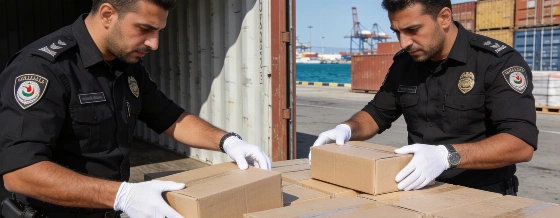
In September 2025, Tunisian authorities intercepted a container at the port of Rades and found 12 million narcotic tablets-the largest drug seizure ever recorded in the country, according to Tuniscope and confirmed by the Tunis Afrique Presse (TAP) agency. This was not an isolated case, but part of a pattern that has left Tunisia's legal and enforcement systems struggling to keep up with drug trafficking networks.
The Ministry of the Interior is now working to rewrite Law No. 52 of 1992, aiming to give police and investigators stronger legal tools against increasingly organized and tech-savvy traffickers. Mohamed Ali Chaibi, who leads the Narcotics Control Service at the Judicial Police Directorate in El Gorjani, said on national television that the new law is meant to address the rise in synthetic drugs and traffickers' use of encrypted communications. This approach has been echoed in recent TAP bulletins and regional security updates.
Escalating seizures and shifting smuggling routes
Over the last five years, Tunisia has seen a sharp rise in cocaine and narcotic tablet seizures. The Ministry of the Interior reports that drug-related cases have tripled, from over 5,000 in 2020 to more than 15,000 in 2025, with arrests climbing to over 27,000. Tunisia's location at the crossroads of Mediterranean and North African routes makes it a key transit point, with drugs arriving by sea, air, and land, as reported by Kapitalis and TAP.
Since 2011, Libya's security vacuum has turned it into a regional storage hub for cocaine, heroin, and synthetic tablets, especially in areas controlled by militias. Large amounts of cocaine and ecstasy now enter Tunisia from Libya. "Lyrica" (Pregabalin) tablets, legally produced in India, are trafficked through a route that includes Turkey, Algeria, Libya, and Tunisia. For every million tablets passing through Tunisia, about 100,000 stay in the country, feeding a domestic market that barely existed ten years ago, according to the Ministry of the Interior.
Legal reform and international cooperation
The current law, last partially revised in 2017, has been criticized for being too rigid. Before the amendment, even first-time cannabis users faced at least a year in prison, a policy that legal experts say "destroyed the future" of many young Tunisians. The 2017 changes gave judges some flexibility, but harsh penalties for traffickers and couriers remain.
Chaibi argues that the new revision needs to go further, allowing undercover operations and the interception of digital communications-methods traffickers already use. He also stresses the importance of international cooperation, especially with neighboring countries, to support joint investigations and real-time intelligence sharing. These priorities match recommendations from the United Nations Office on Drugs and Crime and are regularly covered by TAP and Maghreb Arab Press (MAP) in reports on regional security. Tunisia's efforts are part of a broader push in the Maghreb to strengthen cross-border law enforcement, as seen in recent meetings between Tunisian and Algerian interior ministries.
Freight carriers moving goods between Europe and Tunisia have become key players in smuggling, along with a small number of individuals from the "African" community living in Tunisia. The country does not produce narcotics domestically; all drugs are smuggled in, a point repeatedly made by the Ministry of the Interior and regional security agencies.
Balancing enforcement with prevention
While police focus on stopping supply, Chaibi says reducing demand is just as important. He calls for families, schools, media, and civil society to work together to raise awareness about the dangers of narcotics. The Ministry of Family, Women, Children and the Elderly has already launched a national awareness campaign, working with other ministries and public media to reach at-risk groups. The government is also discussing the creation of specialized addiction treatment centers, signaling a shift toward prevention and rehabilitation in national policy, as reported by Kapitalis and TAP.
Chaibi insists the revised law will apply to everyone, "regardless of their position, status or social rank," including state officials. This stance comes as Tunisia's institutions face pressure to show integrity and effectiveness, not just in security but across the economy. As reported earlier, the financial sector has shown resilience, but the spread of organized crime threatens broader stability.
Tunisia's attempt to modernize its narcotics law is a test of state capacity against fast-moving criminal networks. Whether new legal powers will actually disrupt these networks remains to be seen. For ongoing updates and official statements, readers can consult the Tunis Afrique Presse portal.