
Libya's efforts to shift toward a green economy are running into legal and technical roadblocks. At a recent workshop in Tunisia, the Green Industry Centre and its partners took stock of what's working-and what's holding the country back.
Libya's plans to move its economy in a greener direction are running up against a tangle of legal, regulatory, and technical problems. These issues came into sharp focus during a recent workshop in Tunisia, where the Green Industry Centre-part of the Ministry of Industry and Minerals-joined other stakeholders to discuss how to turn policy into real change. The event highlighted the gap between official strategies and what's actually happening on the ground. This mirrors recent findings from the UN Economic and Social Commission for Western Asia (ESCWA), which co-hosted a national dialogue in Tripoli in September 2026 on moving from extractive energy to renewables under Libya's National Renewable Energy and Energy Efficiency Strategy 2023-2035 (ESCWA/Mirage News).
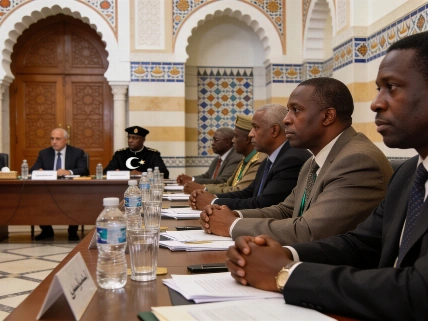
The workshop, called "National Green Economy Roadmap for Libya," took a hard look at how ready the country is for green industrial change. Organized by the German Agency for International Cooperation (GIZ), the University of Rostock, and the Planning Institute, it brought together Libyan institutions and private sector representatives to review early findings from a national study on the circular economy. The Green Industry Centre presented data from its Green Industrial Transformation database, but discussion quickly turned to the main obstacles: Libya's patchwork of laws, inconsistent regulations, and limited technical know-how. The Renewable Energy Authority of Libya (REAoL) pointed to the lack of unified legislation as a major stumbling block, even as the country recently signed a power purchase agreement for a 25 MW solar plant for LISCO with US-based Penta Energy Services in September 2026-a rare concrete step toward national goals.
Legal and financial gaps slow green transition
Participants examined the legal and regulatory environment and found that Libya still lacks clear policies to support green industries, renewable energy, and sustainable transport. Financial limitations and a shortage of technical skills make it even harder to launch circular economy projects. The Green Industry Centre has tried to coordinate efforts among different institutions, but the workshop made it clear that without deeper reforms, Libya's green roadmap risks staying theoretical. The Tunisian Press Agency (TAP) has reported similar problems in Tunisia, showing that these challenges are not unique to Libya and that there's value in learning from neighbors in the Maghreb.
Regional case studies at the workshop showed how other countries have managed similar transitions, but Libya's divided institutions and post-conflict situation make its path more complicated. Reviews of the mining, natural resources, and renewable energy sectors pointed to both untapped opportunities and persistent inertia. One notable project is a Turkish-Libyan joint venture in eastern Libya aiming to produce lower-carbon iron. This initiative has drawn interest from the African Union's Department of Economic Development, Trade, Industry and Mining, with possible investments up to $2.5 billion and a planned commercial launch in early 2028 (Reuters).
What's next for Libya's green agenda?
The Green Industry Centre is taking an active role, but technical workshops alone won't be enough. Libya now faces a test: whether it can pass real legislation, align its regulations, and attract targeted investment. The workshop's discussions made it clear that unless policymakers address these structural problems, the country's green economy plans will remain stuck. For now, Libya's progress depends less on new strategies and more on the political will to break through its own institutional gridlock. As recent coverage by the Algerian Press Service (APS) notes, North Africa's green transition will require strong governance and steady international cooperation.